The log
- April 30, 2026 · 1.0 inch · Sunset Valley and AustinQuarter-size stones across south and central Austin. Enough to bruise older shingles and dent soft metals; a roof under this core should be inspected within the year rather than ignored.
- May 28, 2025 · 1.0 inch · AustinAnother inch-size event over the city, part of a stormy late spring. Marginal on new architectural shingles, meaningful on roofs past fifteen years.
- April 9, 2024 · 2.5 inches · West Lake Hills and near MoPac and Far West BoulevardSeventeen hail reports in one afternoon with the largest at two and a half inches, between a tennis ball and a baseball. Fractured shingles, cracked skylights and tile, deeply dented metal across the Westlake and Northwest Hills corridor. Hundreds of roofs replaced.
- September 24, 2023 · 3.0 inches · West Lake HillsHockey-puck hail, the largest recorded near Austin this decade, in an unusual autumn storm. Catastrophic for shingles under the core; split seams and crushed caps on standing seam; broken tile and skylights.
- June 16, 2023 · 1.5 inches · AustinPing-pong-ball stones over the city in early summer. Bruised and fractured shingles on older roofs, dented gutters and vents, a round of claims across central and north Austin.
The log lists reports of an inch or larger near the city. Smaller hail falls more often and rarely damages a sound roof. Reports outside the immediate Austin area, in Williamson and Hays counties, are not listed here but are available from the same Weather Service archive, and the roofer checks the reports for your town and date on the inspection.
What each size does
| Hail size | Asphalt shingles | Standing-seam metal | Concrete or clay tile |
|---|---|---|---|
| Under 1 inch | Rarely damages sound shingles; may bruise brittle ones past fifteen years | No damage | No damage |
| 1 to 1.25 inches | Bruises and granule loss on older or thin shingles; usually survives Class 4 | Faint dents possible on 26-gauge | Rarely cracks |
| 1.5 to 1.75 inches | Bruises and fractures on standard shingles; Class 4 mostly holds | Visible dents; cosmetic | Occasional cracked tiles |
| 2 to 2.5 inches | Fractures and granule stripping; replacement likely, Class 4 included | Deep dents; seams and caps may split | Cracked and broken tiles; underlayment exposed |
| 3 inches and larger | Destroyed | Severe denting; split seams, crushed caps, punctured boots | Widespread breakage; skylights shattered |
Was my roof under the core?
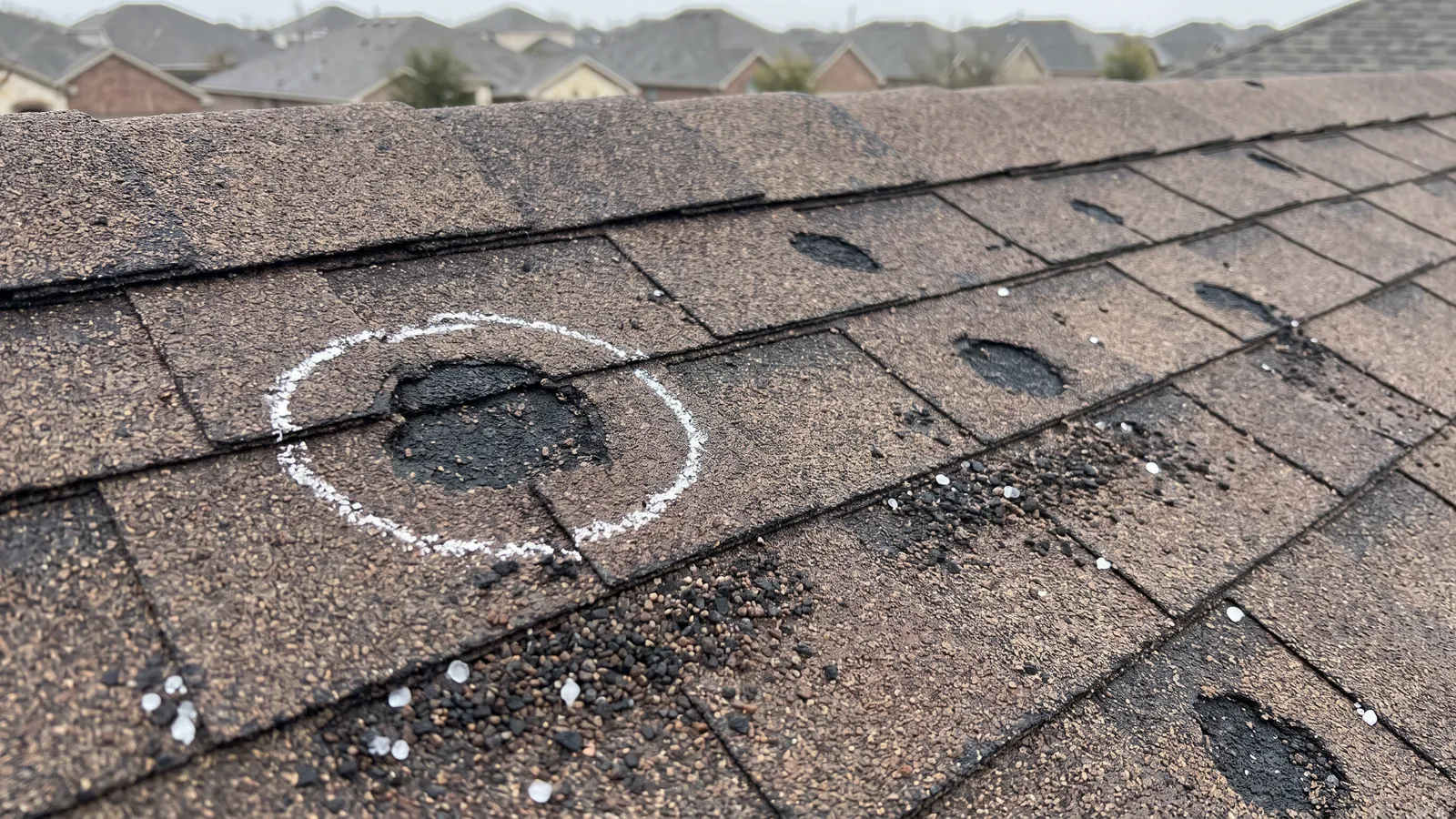
Walk the yard first. Dents in the gutters and downspouts, dings in the mailbox, split or bruised leaves, chipped paint on fences and a lawn full of twigs all say hail fell here. Soft metals on the roof, the vent caps and the air-conditioner's fins, take dents before shingles show anything from the ground. Then look at the shingles from the ladder, or ask for the free inspection: round, random bruises with displaced granules, soft to the thumb, concentrated on the slopes facing the storm's approach. A roof can take a damaging storm and look fine from the driveway for a year.
Why the date matters
Your insurance claim carries a date of loss, and the carrier will match it against recorded storms. An inspection soon after the event ties the damage to the date cleanly; an inspection two years later invites an argument about which storm, or about age. Most Texas policies also require notice within a year, some sooner. If one of the dates above was over your house, the inspection is free and the photographs are dated. The claim guide explains what happens after that.
Questions on this
Does hail size alone decide whether my roof is damaged?
No. Shingle age and grade matter as much; inch hail that does nothing to a five-year-old Class 4 roof can end a twenty-year-old three-tab roof. The inspection reads the roof, not just the storm report.
The storm was years ago. Can I still check?
Yes, and you should, because bruised shingles fail over time. Whether a claim is still open depends on your policy's notice deadline, commonly one year; a repair for your own account has no deadline.
Where do the dates come from?
The National Weather Service's local storm reports, which log hail size and location as spotters and the public report them. The roofer checks the archive for your town and date during the inspection.
Is Class 4 worth it given these sizes?
For the common inch to inch-and-three-quarter storms, yes; a Class 4 shingle generally survives them. The 2.5- and 3-inch West Lake Hills events would mark anything. Class 4 turns most seasons into non-events and earns a premium discount meanwhile.
Do metal roofs need inspecting after hail?
Yes. Dents in the field are usually cosmetic and often excluded from coverage, but split seams, crushed ridge caps and cracked fastener boots are functional and let water in. The inspection photographs each type separately.
Read next: Hail and storm damage · Hail claims in Texas · West Lake Hills · Class 4 shingle roofs