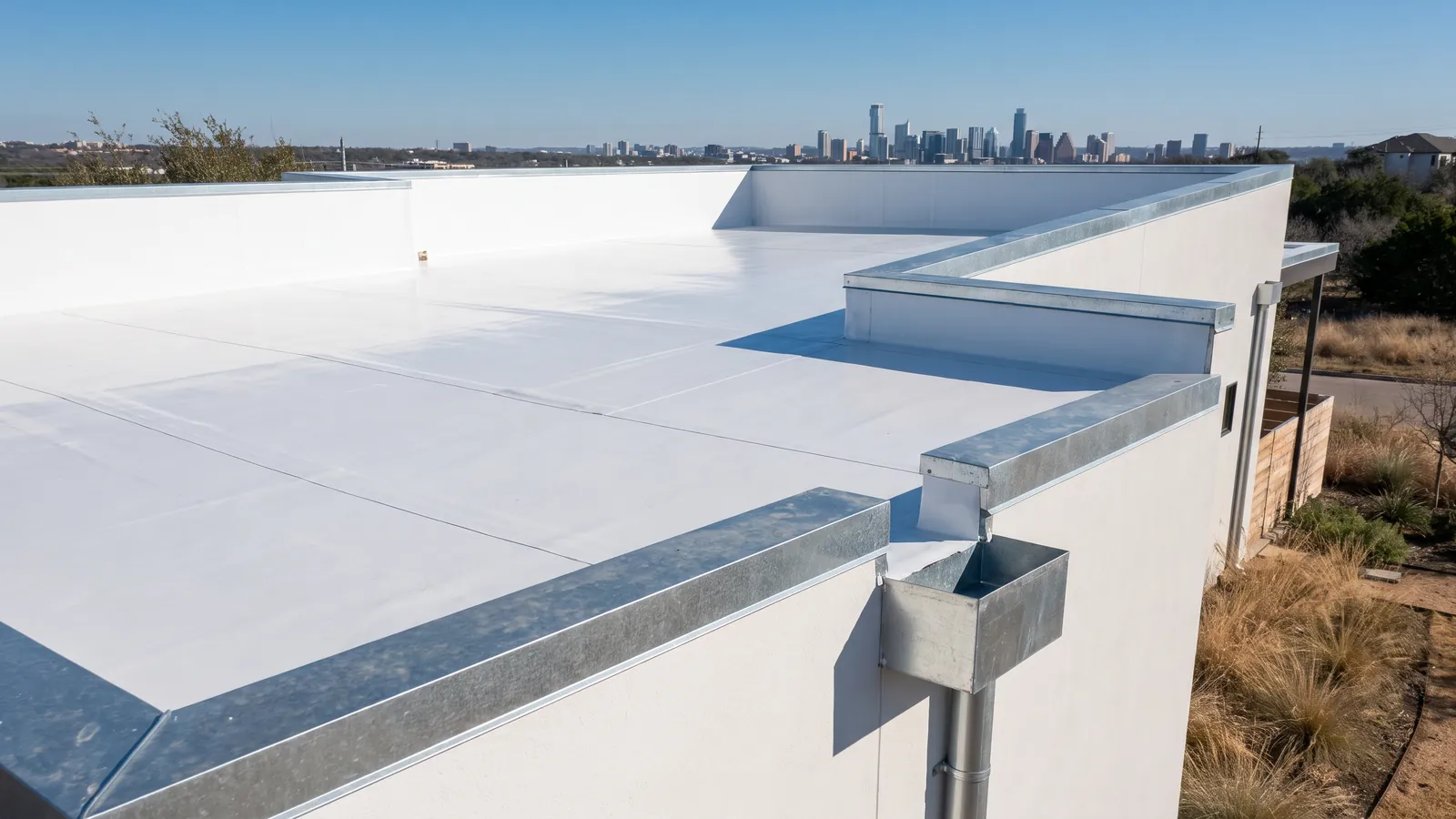
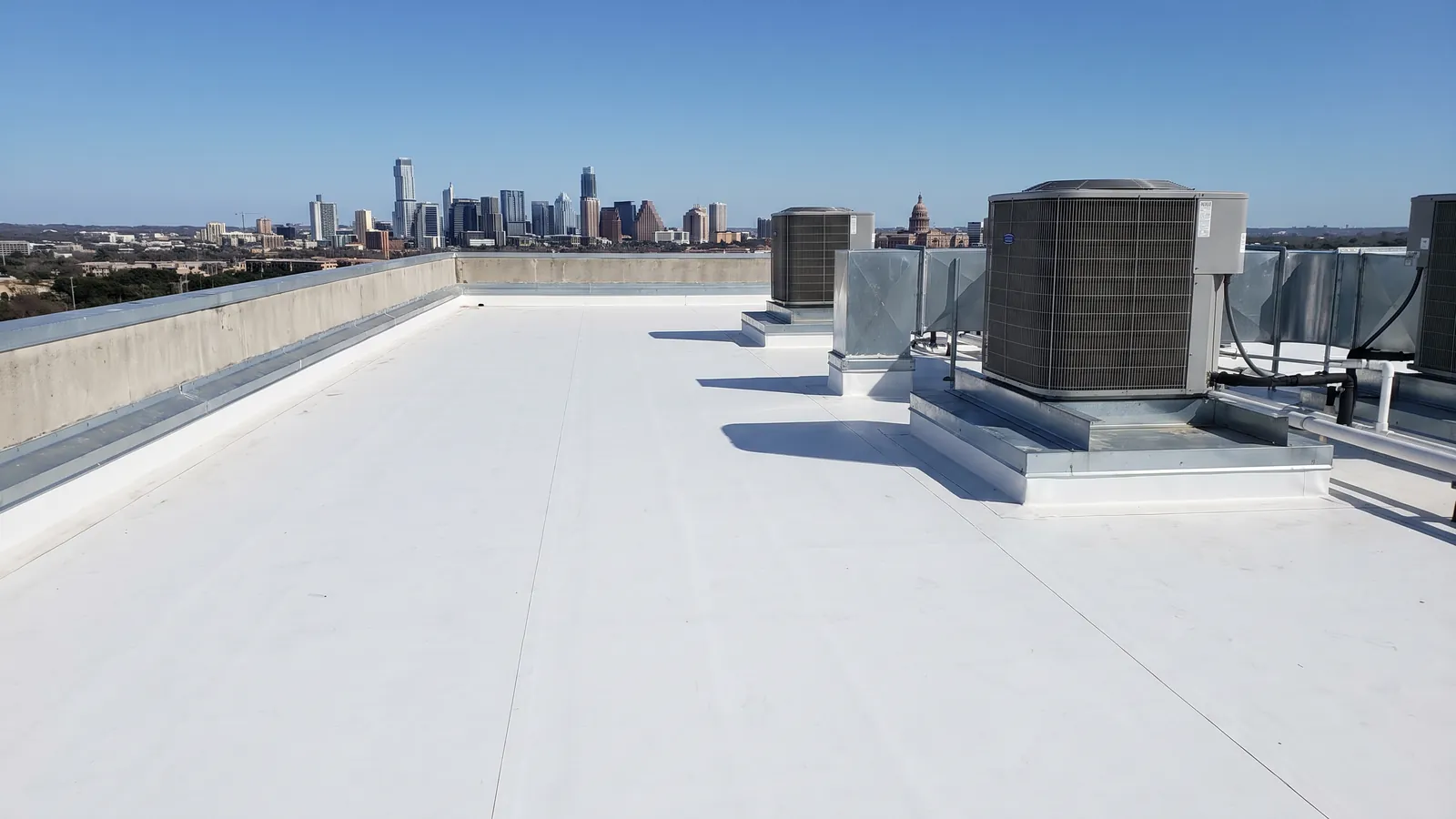
The two membranes that make sense here are TPO and modified bitumen. TPO is a white single-ply sheet, heat-welded at the seams, that reflects most of the summer sun and keeps the deck under it dramatically cooler; it is what goes on the modern homes and most commercial roofs, and a 60-mil sheet with welded seams is a twenty-to-twenty-five-year roof when the details are right. Modified bitumen is asphalt reinforced with polyester and rubber, laid in two layers with a granulated cap sheet; it tolerates foot traffic better, suits small additions and porches, and comes in reflective caps as well as the traditional gray and tan.
Drainage is the part that separates a flat roof that lasts from one that leaks in year five. Water must be off the roof within 48 hours of a rain, which means a slope of at least a quarter inch per foot toward a drain, a scupper through the parapet or an edge gutter. Decks that were built dead flat, which is most of the 1950s and 60s wings and plenty of the newer additions, get tapered insulation under the new membrane to create that fall. Ponding is where UV, debris and seam stress meet; eliminate it and the membrane lasts its rated life.
Repairs are routine when the membrane itself is sound: a seam re-welded, a flashing at a parapet or a pipe rebuilt, a split patched with a welded TPO target, a blister in mod-bit cut and re-laid. When a membrane has chalked through, shrunk away from its flashings or been patched a dozen times, replacement is the honest answer, and the roofer will show you the photographs that make the case either way. On the modern homes the metal edge and parapet caps are part of the job, because that is where water gets behind the membrane.
How the job is done
TPO heat-welded seams
60-mil TPO with seams welded, not glued, probed after cooling; welded target patches at every penetration.
Modified bitumen in two layers
Base sheet mechanically fastened, cap sheet torched or self-adhered, with granulated or reflective caps for the Texas sun.
Tapered insulation for fall
Polyiso tapered to a quarter inch per foot toward drains or scuppers on decks that were built flat, so water leaves the roof.
Scuppers, drains and edge metal
Parapet scuppers with conductor heads, interior drains with strainers, and new edge metal clad in the membrane.
Walk pads where feet go
Pads at the hatch, around rooftop units and along the service path, because a flat roof is walked on and a punctured one leaks.
Repair before replacement
Seams, flashings and splits repaired when the membrane has life left; replacement recommended only when the photographs justify it.
What flat and low-slope roofs costs around Austin in 2026
| Item | Planning range | Depends on |
|---|---|---|
| Flat roof inspection with photographs | Free | Any membrane |
| TPO, 60-mil, installed over insulation, per square | $800 – $1,400 | Insulation; details; parapets |
| Modified bitumen, two-ply, per square | $600 – $1,000 | Cap type; tear-off |
| Tapered insulation to create fall, per square | +$150 – $400 | Thickness; drainage layout |
| Seam, flashing or split repair | $350 – $1,200 | Extent; height |
| Scupper or drain rebuilt | $300 – $900 | Count; conductor heads |
| Edge metal and parapet caps, per foot | $18 – $40 | Profile; finish |
| Coating over a sound membrane, per square | $250 – $500 | Membrane condition; prep |
These are 2026 planning ranges for Travis, Williamson and Hays counties, not quotes. The figure that binds anyone is the itemized sheet written after the inspection, good for 30 days, with materials, labor, decking, flashing, permit and disposal on their own lines. The inspection itself is free.
On the roof
Questions about flat and low-slope roofs
Can a flat roof be coated instead of replaced?
When the membrane is sound and the problem is sun wear, a reflective elastomeric or silicone coating adds years and lowers the roof temperature. Over a shrunken, split or chronically ponding membrane it is money wasted, and the roofer will say which yours is.
Why does my flat roof pond after every rain?
The deck has no fall, or the drain is in the wrong place, or the insulation has compressed. Tapered insulation under a new membrane fixes it permanently; adding a drain where the water actually sits fixes it on some roofs.
Is white TPO worth it on a house?
In Austin, yes. A white membrane can run thirty to fifty degrees cooler than a dark one on a July afternoon, which shows up in the rooms below. It does streak with dust and pollen; a rinse once a year keeps it reflective.
How long do flat roofs last here?
Twenty to twenty-five years for 60-mil TPO with good drainage, fifteen to twenty for modified bitumen, less for either when water stands on it. Drainage decides more than the material does.
Do you handle the metal edge on modern homes?
Yes. The drip edge, parapet caps and wall transitions are where modern flat roofs leak, and they are part of every replacement priced here.