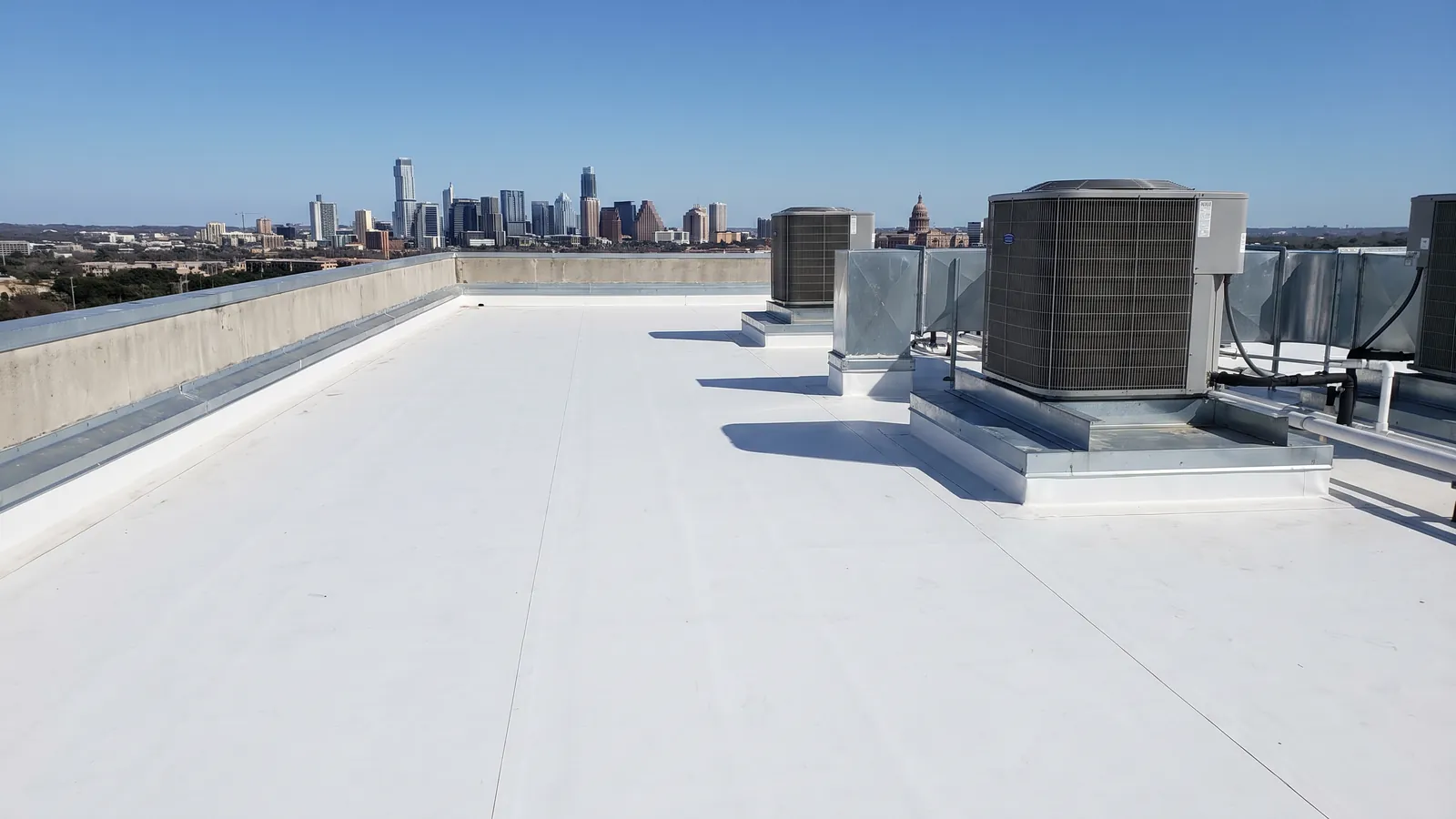
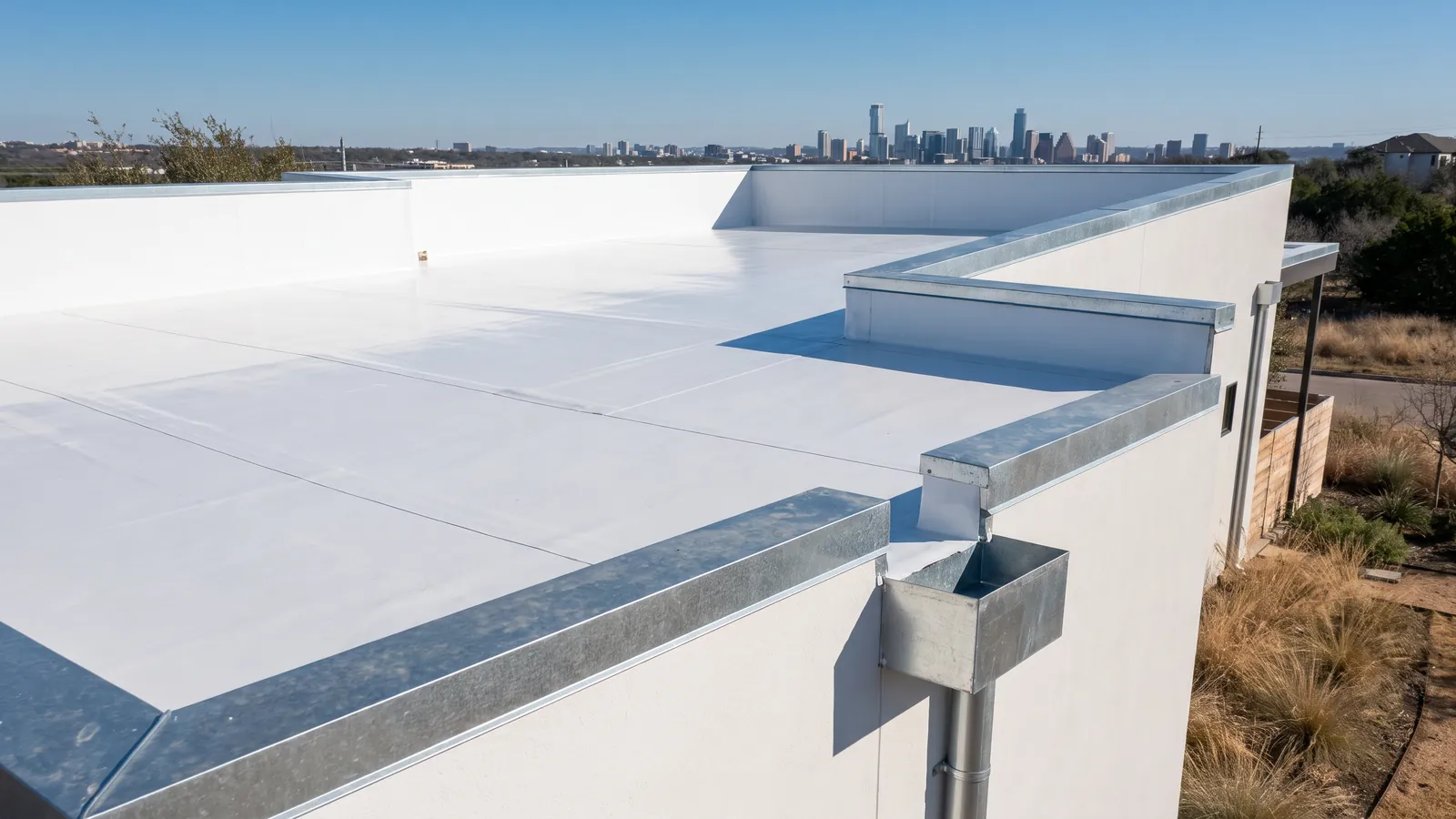
Most commercial roofs in the Austin area are single-ply TPO or older modified bitumen over metal or wood decks, with a parapet, interior drains or scuppers, and a dozen penetrations for HVAC curbs, exhaust fans, vent pipes and conduit. The leaks are almost always at those penetrations and at the seams, flashings and drains rather than in the field, which is why a competent commercial repair starts with a roof survey, not a sales pitch for a new roof. Where the membrane has reached the end, a replacement in 60-mil TPO with new tapered insulation gives a twenty-year roof that is also white, which drops the cooling load on the units sitting on it.
The job has to fit the building. Restaurants are roofed on their closed day; churches between services; offices in sections with the units protected and the work area contained so nothing falls on a car in the lot. Rooftop units are disconnected and lifted only by a licensed HVAC contractor, scheduled with the roofing. Safety lines, warning flags and a tie-off plan are part of the price. The owner or property manager gets a written scope, a schedule and daily photographs, and the completed roof comes with the manufacturer's warranty registered to the building and a maintenance plan that keeps it valid.
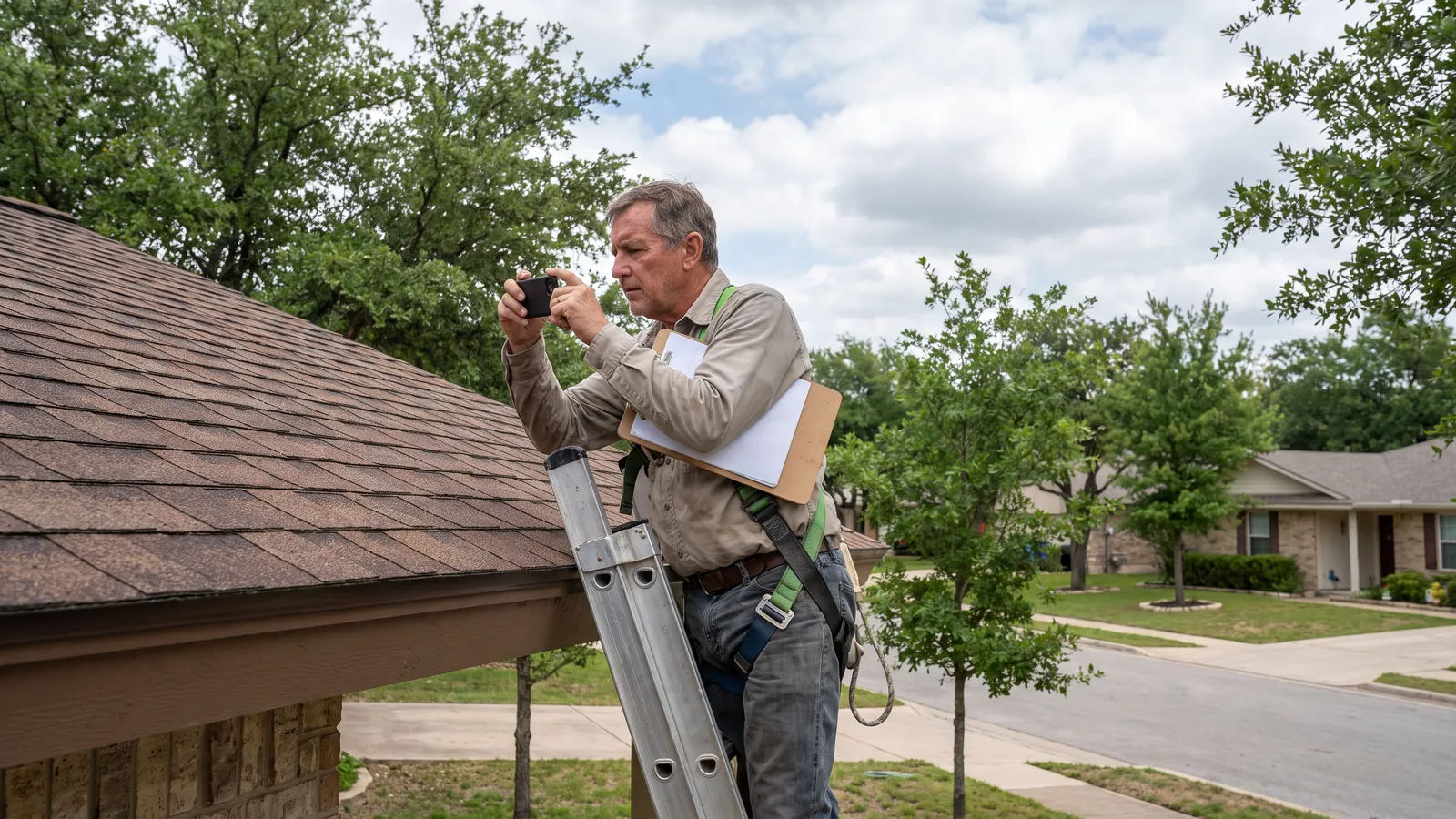
Maintenance is where commercial roofs are won or lost. Twice a year, before and after the storm season, the roof is walked, drains and scuppers cleared, seams and flashings probed, unit curbs and pitch pockets resealed where needed, and a written report with photographs sent to the owner. A ponding area found in April is a tapered-insulation fix; the same area found when the ceiling tiles come down in a restaurant is a very different afternoon. Hail and wind inspections for a commercial claim follow the same documentation standard as residential, within the same Texas rules on deductibles and adjusting.
How the job is done
Survey before scope
Every seam, flashing, drain, curb and penetration checked and photographed; the scope is written from what was found, not from the square footage.
Scheduled around the business
Closed days, off-hours and sectional work so tenants keep trading; the lot and entrances protected and cleaned daily.
TPO and modified bitumen replacements
60-mil TPO with welded seams or two-ply mod-bit, over tapered polyiso where the deck ponds, with new edge metal and copings.
HVAC coordination
Units disconnected and set by a licensed mechanical contractor on the roofing schedule; curbs and pitch pockets flashed properly afterward.
Safety and containment
Tie-off plan, warning lines, debris chutes and a swept lot, with the paperwork a property manager needs.
Maintenance with written reports
Spring and fall inspections, drains cleared, seams probed, repairs made, photographs and a report to the owner each visit.
What commercial roofing costs around Austin in 2026
| Item | Planning range | Depends on |
|---|---|---|
| Commercial roof survey with photographs and report | Free | Any roof under 30,000 square feet |
| TPO 60-mil replacement over tapered insulation, per square foot | $7 – $12 | Insulation; penetrations; parapets |
| Modified bitumen two-ply replacement, per square foot | $6 – $10 | Deck; tear-off |
| Standing-seam metal on a low-slope commercial roof, per square foot | $11 – $18 | Profile; gauge |
| Repairs: seams, flashings, curbs, drains | $500 – $2,500 | Extent; height; access |
| Reflective coating over a sound membrane, per square foot | $2.50 – $5 | Prep; warranty term |
| Semi-annual maintenance plan, per visit | $350 – $900 | Roof size; unit count |
| Emergency leak response, commercial | $450 – $1,200 | Same day where possible |
These are 2026 planning ranges for Travis, Williamson and Hays counties, not quotes. The figure that binds anyone is the itemized sheet written after the inspection, good for 30 days, with materials, labor, decking, flashing, permit and disposal on their own lines. The inspection itself is free.
On the roof
Questions about commercial roofing
Can you work while the business stays open?
Yes, in sections, off-hours or on closed days, with the work area contained and entrances kept clear. Restaurants and churches are usually roofed on their closed day.
Who moves the air-conditioning units?
A licensed HVAC contractor, scheduled with the roofing crew. The roofer flashes the curbs after the units are reset. Both are on the written schedule.
Is a coating a real option on a commercial roof?
Over a sound membrane with good drainage, a silicone or acrylic coating buys ten or more years and lowers the roof temperature, at a fraction of replacement cost. Over a ponding, split or saturated membrane it fails fast; the survey decides which you have.
Do you handle hail claims on commercial buildings?
The same way as residential: the damage is documented to the adjuster's standard, the roofer meets the adjuster, and the owner handles the claim. Texas law on deductibles and adjusting applies to commercial property too.
How often should a flat commercial roof be inspected?
Twice a year, before and after the spring storm season, and after any hail or high-wind event. Most manufacturer warranties require documented maintenance to stay in force.