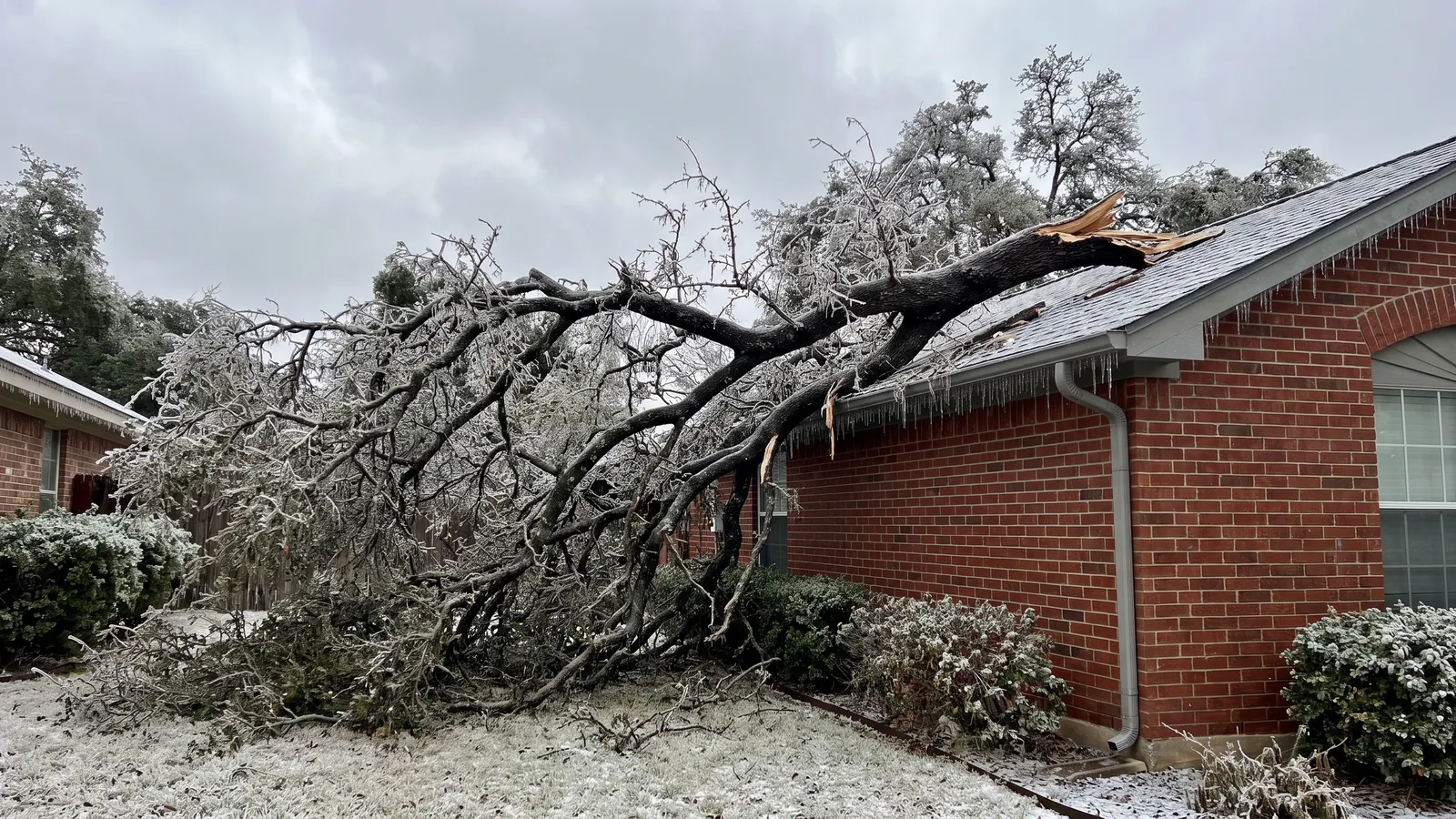
Austin's emergencies come in three kinds. Spring and early summer bring the hail and wind storms, often after dark, that fracture shingles and strip slopes. Late summer brings the dead live oak limbs that drop in drought, and the occasional remnant of a Gulf storm. And every few winters an ice storm does what Mara did from January 30 to February 3, 2023, when freezing rain brought down an estimated 170,000 tons of limbs across the city, damaged roughly 31 percent of Austin's trees by the Texas A&M Forest Service's count, and left a third of Austin Energy's customers without power at the peak. Most of the roof damage that week was limbs through decking and gutters torn off by the weight of ice.
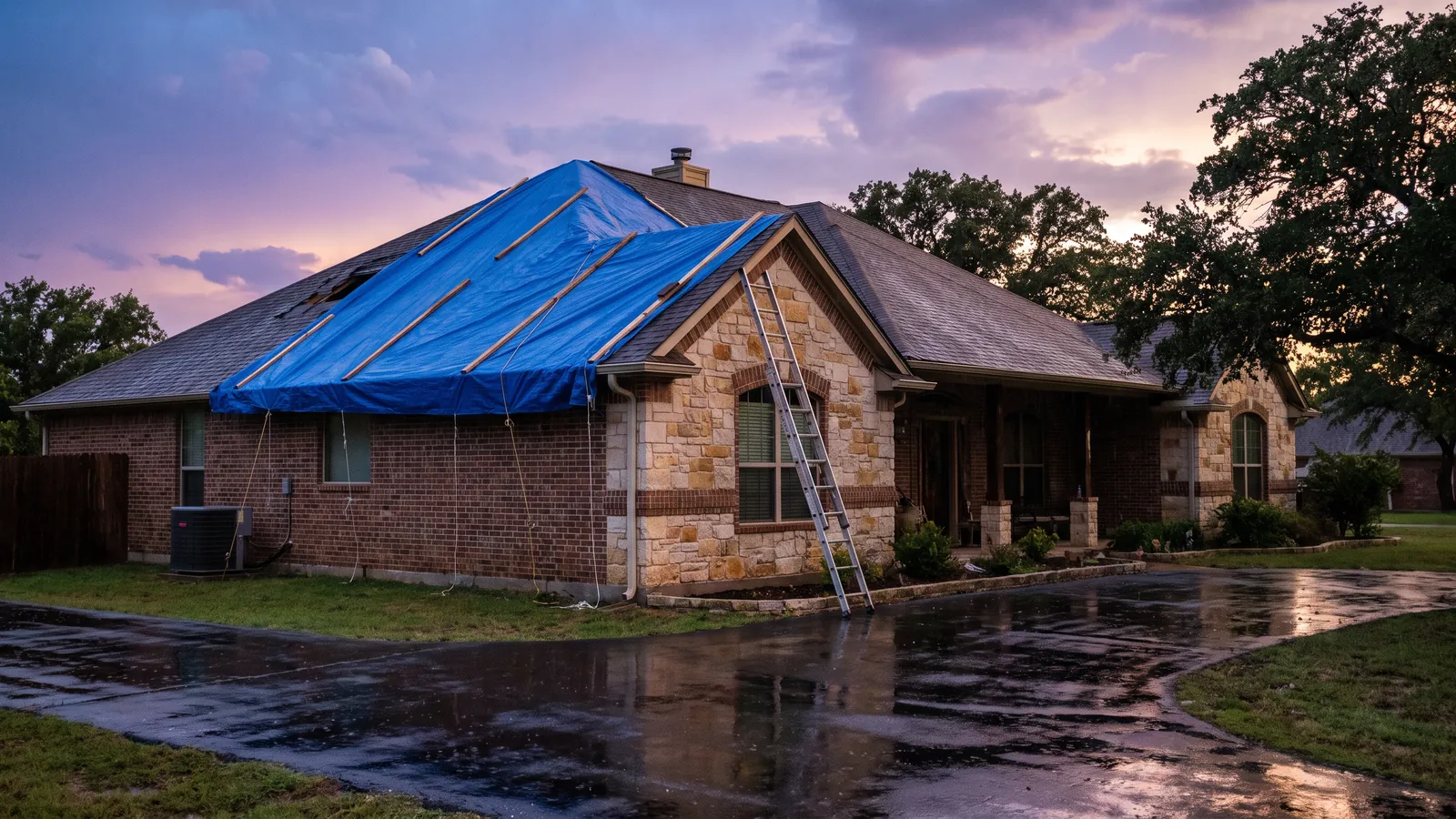
The first call is answered at any hour by an automated receptionist that takes the address, your number and what is happening, and a roofer calls back within minutes for an active leak. Where it is safe to climb, meaning the wind has dropped, there is no lightning and the roof is not iced over, a crew comes the same night to tarp the damage: a heavy tarp stretched past the damaged area, battened at the top under the shingles and down the sides, weighted at the eave, so it sheds water instead of pooling it. If a limb is on the roof, it is cut and lowered first. If the roof cannot be safely climbed until morning, the roofer tells you so and comes at first light.
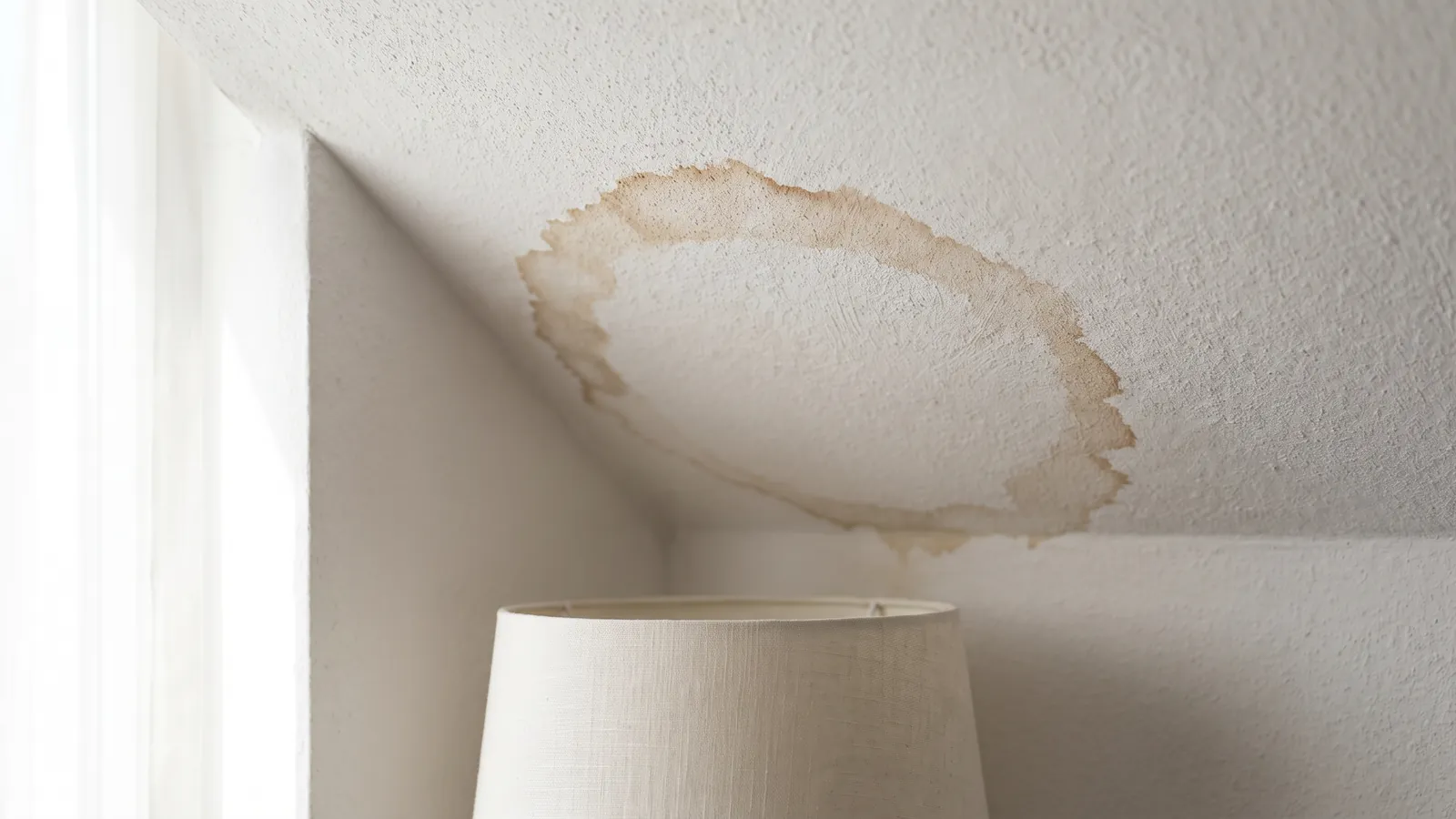
Inside the house, while you wait: move furniture and electronics out from under the drip, put a bucket under it and a towel in the bucket to stop the splash, and if the ceiling is bulging with water, puncture the bulge with a screwdriver over the bucket so it drains instead of collapsing. Turn off power to the room if water is near a light fixture or an outlet. Stay off the roof yourself and out of the attic over a sagging ceiling. If a power line is down with the limb, call Austin Energy or 911 and keep clear; nobody climbs until the line is dealt with.
How the job is done
Picked up at any hour
The number is staffed around the clock; an active leak gets a callback from a roofer within minutes and a crew dispatched where it is safe.
Safety decides the timing
Crews climb when wind, lightning and ice allow. If that is first light rather than midnight, the roofer says so plainly.
Tarps that actually shed water
Heavy tarps run past the damage, battened under the shingles at the top and down the sides, weighted at the eave, never just laid on and nailed through.
Limbs cut and lowered
A limb on the roof is sectioned and lowered, not dragged, so it does not open the roof further on the way down.
Photographs that night
The damage is photographed before the tarp goes on, which is what your insurer will want to see and what the daylight repair is priced from.
Daylight repair at a written price
The permanent repair, or the replacement if the roof is beyond it, is priced on the sheet the next day; the tarp fee is credited when that work goes ahead.
What emergency tarping costs around Austin in 2026
| Item | Planning range | Depends on |
|---|---|---|
| Emergency tarp, one slope, same night | $350 – $900 | Area; stories; access; credited against the repair |
| Large or multi-slope tarp | $900 – $1,800 | Area; batten work |
| Limb sectioned and removed from the roof | $250 – $800 | Size; whether a saw crew is needed |
| Temporary decking patch under the tarp | $150 – $400 | Hole size |
| Permanent repair of the damaged area | $500 – $2,500 | Decking, shingles, flashing involved |
| Replacement if the roof is beyond repair, per square | $450 – $650 | Architectural shingles |
| Gutter section torn off by ice or limbs | $9 – $17 per foot | Profile; hangers |
| Night, weekend or holiday dispatch | Included in the tarp range | No separate surcharge |
These are 2026 planning ranges for Travis, Williamson and Hays counties, not quotes. The figure that binds anyone is the itemized sheet written after the inspection, good for 30 days, with materials, labor, decking, flashing, permit and disposal on their own lines. The inspection itself is free.
On the roof
Questions about emergency tarping
Can you come tonight?
If water is coming in and the roof can be climbed safely, yes, the same night. In a widespread storm the list is worked in order of water entering the house. If lightning, wind or ice make the roof unsafe, the crew comes at first light and the roofer tells you so on the callback.
Will insurance pay for the tarp?
Most policies cover reasonable steps to prevent further damage after a covered loss, and a tarp is exactly that. Keep the invoice and the night's photographs with your claim. The tarp fee is also credited when the permanent repair is done here.
How long can a tarp stay on?
A properly battened heavy tarp lasts weeks, sometimes a season, though sun and wind degrade it. It is a bridge to the repair, not a repair; the permanent work is scheduled as soon as the sheet is approved.
A tree is on the roof. Who do I call first?
If a power line is involved, Austin Energy or 911, and stay clear. Otherwise call here: the crew sections and lowers the limb, tarps the opening and photographs the damage. Large trees on the structure may need a tree service with a crane, which the roofer will say on arrival.
What should I do inside right now?
Catch the water, move what it can ruin, drain a bulging ceiling into a bucket with a screwdriver puncture, and turn off power to the room if water is near fixtures. Do not climb onto the roof or into the attic above a sagging ceiling.