2026 planning ranges
| Item | Range | What moves it |
|---|---|---|
| Standing-seam steel, 24-gauge, Kynar finish, per square | $1,300 – $1,800 | Panel profile, seam type, trim count |
| Standing-seam steel, 26-gauge, per square | $1,100 – $1,500 | Lighter gauge; fine for most houses |
| Exposed-fastener R-panel or corrugated, per square | $650 – $1,000 | Gauge; finish; deck or purlins |
| Typical 25- to 35-square home, standing seam | $28,000 – $58,000 | Hips, valleys, dormers and chimneys add trim |
| Typical home, exposed fastener | $17,000 – $33,000 | Simpler roofs suit it best |
| Tear-off of the old roof and disposal | Included | No metal over shingles here |
| High-temperature synthetic underlayment and valley membrane | Included | Required under metal |
| Decking replaced | $95 – $160 per sheet | Found at tear-off |
| Snow guards, rainwater diverter, gutter upgrades | $300 – $1,200 | Rainwater homes in the Hill Country |
| Metal roof repair on an existing roof | $400 – $1,500 | Fasteners, seams, boots, panels |
Standing seam against exposed fastener
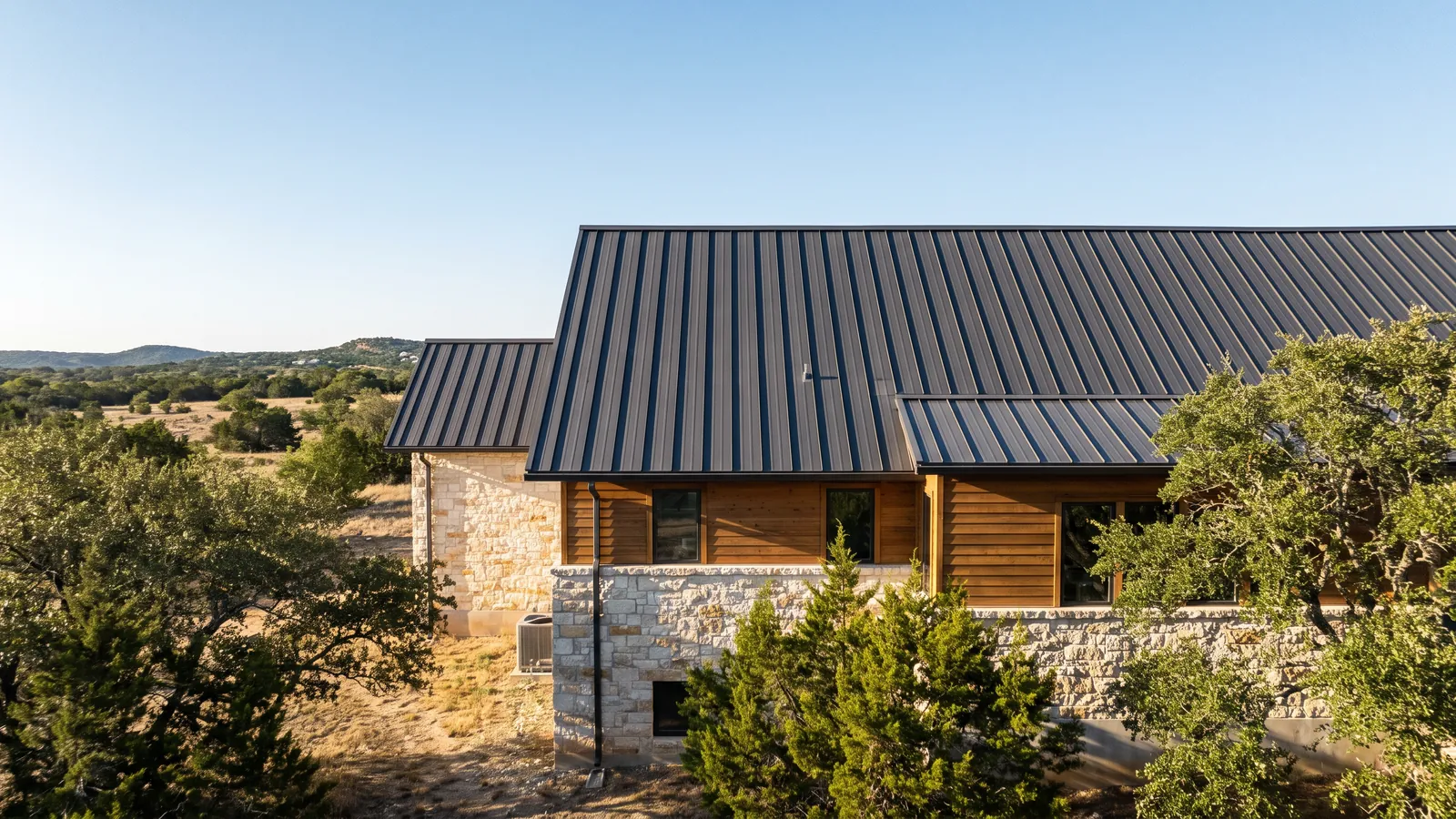
Standing seam runs panels from ridge to eave with raised seams locked together and clips hidden beneath, so no screw passes through the panel face and the metal can expand on a 105-degree afternoon and contract at night without working anything loose. It is the system on the custom homes in Westlake, Lakeway and Dripping Springs. Exposed-fastener panels screw through the face with gasketed fasteners every couple of feet; they cost about half as much, go on fast, and suit barns, porches, workshops and plain gable roofs, with the understanding that the gaskets harden after fifteen or twenty years and the screws need checking and eventually replacing.
Gauge and finish
Residential metal is 24- or 26-gauge Galvalume-coated steel. The heavier 24-gauge resists hail dents and oil-canning better and costs more; 26-gauge is adequate for most houses. The finish is either bare Galvalume, which weathers to a soft gray, or a Kynar 500 paint in the dark bronzes, charcoals, grays and the occasional red or green that Hill Country architecture favors, with paint warranties of thirty to forty years. Lighter finishes reflect more heat; so does the air gap under a standing-seam panel.
The twenty-year arithmetic
| Over 25 years, typical 30-square Austin home | Class 4 shingles | Standing seam |
|---|---|---|
| Roofs installed | One, likely a second at year 20 to 25 | One |
| Installed cost, 2026 dollars | $15,000 to $22,000, then again | $33,000 to $48,000 |
| Hail outcome, common 1-inch storms | Usually survives; granule loss over time | Survives; no granule loss |
| Hail outcome, 2.5-inch and larger | Likely a claim and a deductible | Dents, often excluded as cosmetic; roof keeps working |
| Attic temperature in July | Hot under dark shingles; cooler with reflective colors | Noticeably cooler with a light finish and the air gap |
| Premium discount | Class 4 discount with many carriers | Class 4 discount, often with a cosmetic exclusion |
| Class A for the WUI zones | Yes, over the correct underlayment | Yes |
Put plainly: if you will own the house for five years, shingles are cheaper. If you will own it for twenty, metal often is, before counting the cooling savings and the deductibles not paid. In between, it comes down to how much you value never roofing the house again and how you feel about the look.
Two cautions
Hail dents metal, and most Texas carriers now write a cosmetic-damage exclusion on metal roofs, so a dented but watertight roof may not be a covered loss. And a metal roof is only as good as its flashing details: ridge, eave, valleys, pipes and wall transitions. Ask any installer to show photographs of those details on finished roofs, and get the panel manufacturer's trim named on the sheet.
Questions on this
Can metal go over my existing shingles to save the tear-off?
Some installers do it on purlins. The crews here do not, because it hides decking damage, traps heat and moisture, and voids most panel warranties. Tear-off is included in every metal price.
How long does the installation take?
Two to four days for a typical house, longer for complex roofs; standing seam is cut and formed on site and the trim work is slow by nature. The roof is dried in each night.
Will a metal roof lower my electric bill?
A reflective finish and the air gap under standing seam reduce attic temperatures measurably in summer. Whether that shows on the bill depends on insulation, air sealing and ductwork; ask the roofer about your attic rather than trusting a brochure percentage.
Is metal loud in the rain?
Over a solid deck with underlayment and an insulated attic, no louder than shingles. The barn-roof drumming comes from panels on open purlins.
Does a metal roof help with the WUI code?
Yes. Metal over the required underlayment on a solid deck is a Class A roof assembly, which Austin's Wildland-Urban Interface Code requires inside its zones, and it meets the metal-flashed valley requirement by nature.
Read next: Metal roofing · Roof replacement cost · Austin's wildfire-zone roof rules · Dripping Springs