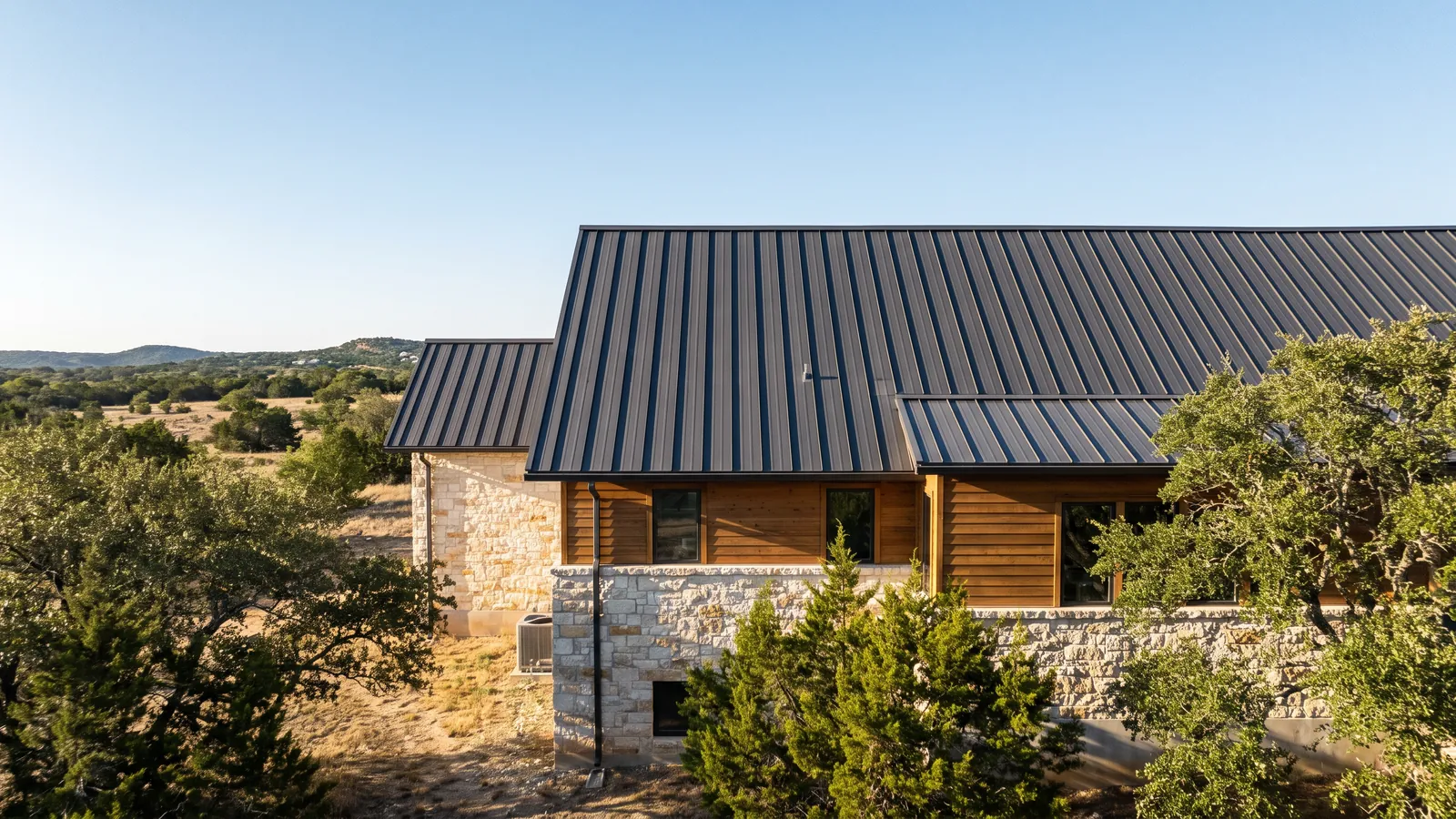
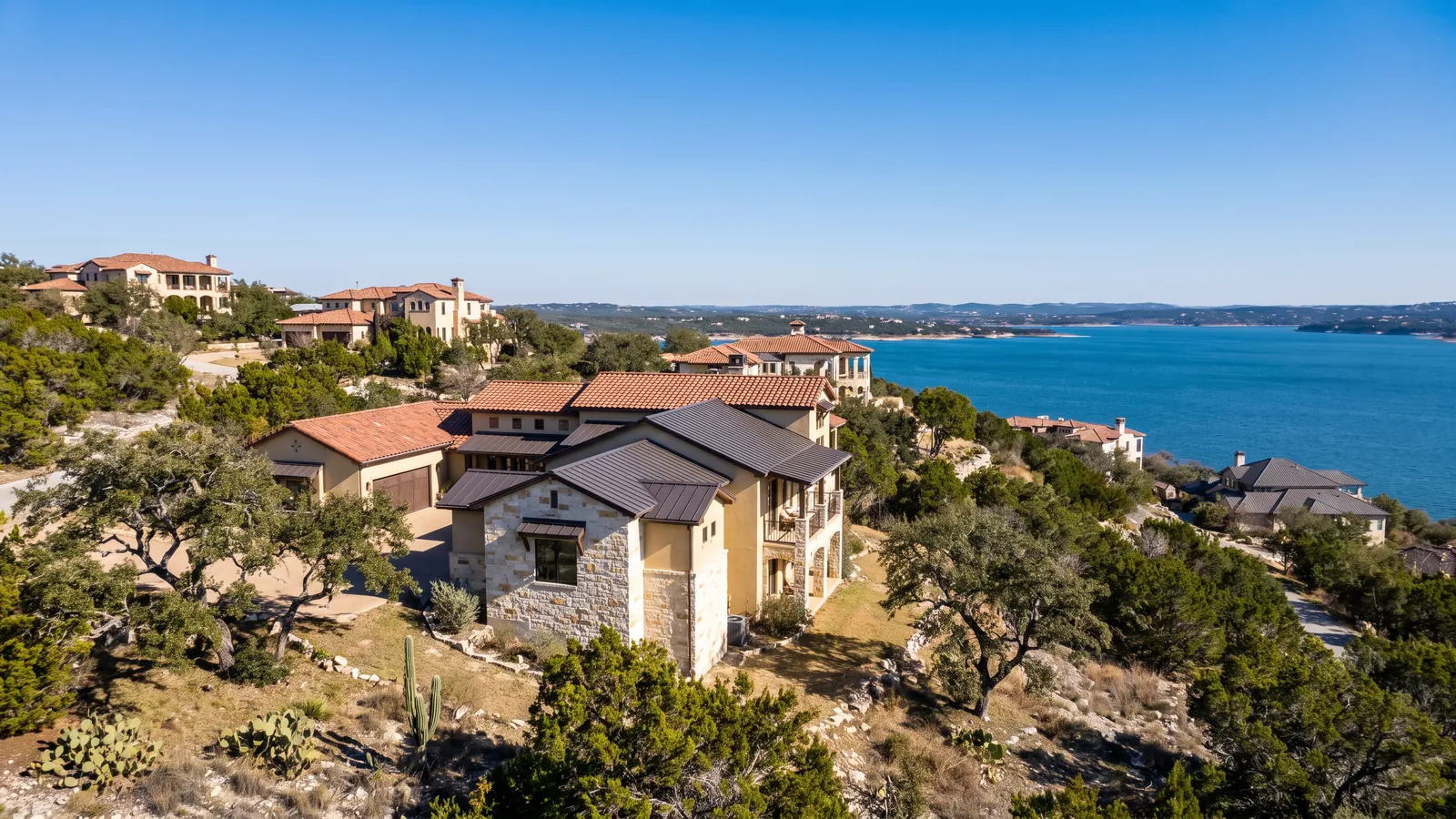
Two kinds of metal roof go on Austin homes. Standing seam is the premium system: 16- to 18-inch panels run from ridge to eave with raised seams that lock together and clips hidden underneath, so no fastener penetrates the panel and the metal can expand across a 100-degree day without working a screw loose. It is what you see on the modern limestone-and-cedar houses in Westlake, Dripping Springs and Lakeway. Exposed-fastener panels, the R-panel and corrugated profiles, cost about half as much, screw through the panel into the deck with gasketed fasteners, and suit workshops, barns, porches and budget-minded homes, with the understanding that the gaskets need checking after fifteen years or so.
The metal itself is Galvalume-coated steel, 24- or 26-gauge, either bare or finished with a Kynar 500 paint that holds its color for decades. Light finishes reflect more heat; the common Austin choices, galvanized gray, charcoal, dark bronze and a bright Galvalume, each change the attic temperature in July by a measurable amount, and the roofer can walk through the trade-off. Installed over a high-temperature synthetic underlayment on a solid deck, with ice-and-water shield in the valleys, a standing-seam roof is a Class A assembly, which is what the City of Austin's Wildland-Urban Interface Code requires inside its zones, and what makes the insurance conversation easier everywhere.
Two honest caveats. Large hail dents metal, and most Texas carriers write a cosmetic-damage exclusion on metal roofs, so a dented panel that still sheds water may not be a covered loss; the hail page explains how that is assessed. And metal is only as good as its details: the ridge, the eave, the valleys, the pipe flashings and the transitions to walls are where a metal roof leaks if the installer rushed. The crews here flash with the manufacturer's own trim and boots, and the photographs of those details are part of the finished package. Existing metal roofs with fastener leaks or failed seams are repaired too; see the price list.
How the job is done
Standing seam with concealed clips
Panels locked at raised seams and held by hidden clips, so the metal can move with the heat and nothing pierces the panel face.
24- or 26-gauge Galvalume steel
Bare Galvalume or Kynar 500 painted finishes with long color warranties; gauge chosen for the span and the hail exposure.
High-temperature underlayment
Synthetic underlayment rated for the heat under a metal roof, with self-adhered membrane in valleys and at penetrations.
Class A assembly
Metal over the right underlayment on a solid deck meets the Class A rating Austin's WUI Code requires inside the zones.
Factory trim and boots
Ridge caps, eave and rake trim, valley pans and high-temperature pipe boots from the panel manufacturer, not improvised from flat stock.
Rainwater-ready details
Gutter sizing, downspout placement and a first-flush diverter where a collection system is planned, common on Hill Country wells.
What metal roofing costs around Austin in 2026
| Item | Planning range | Depends on |
|---|---|---|
| Standing-seam steel, installed, per square | $1,100 – $1,800 | Gauge, finish, profile, roof complexity |
| Exposed-fastener R-panel or corrugated, per square | $650 – $1,000 | Gauge, finish, deck condition |
| Typical 25- to 35-square home, standing seam | $28,000 – $58,000 | Complexity; trim; tear-off |
| Metal over a porch, workshop or barn, per square | $600 – $950 | Span; purlins or deck |
| Metal roof repair: fasteners, seams, boots | $400 – $1,500 | Extent; access |
| Panel replacement after hail or a limb | $400 – $1,500 | Panels; matching finish |
| Snow guards, rainwater diverter, gutter upgrades | $300 – $1,200 | Scope |
| Tear-off of the old roof and disposal | Included | Part of every replacement |
These are 2026 planning ranges for Travis, Williamson and Hays counties, not quotes. The figure that binds anyone is the itemized sheet written after the inspection, good for 30 days, with materials, labor, decking, flashing, permit and disposal on their own lines. The inspection itself is free.
On the roof
Questions about metal roofing
How long does a metal roof last in Texas?
Fifty years and beyond for standing-seam Galvalume with a Kynar finish, against twenty to thirty for architectural shingles in the same sun. The paint warranty alone typically runs thirty to forty years.
Is a metal roof loud in the rain?
Over a solid deck with underlayment and an insulated attic, no louder than shingles. The tin-roof drum effect comes from metal screwed to open purlins on a barn.
Does metal lower my cooling bill?
A reflective finish and the air gap under a standing seam reduce attic temperatures noticeably in July; savings depend on insulation and ductwork, so treat vendor percentages with suspicion and ask the roofer about your attic specifically.
Can metal go over my existing shingles?
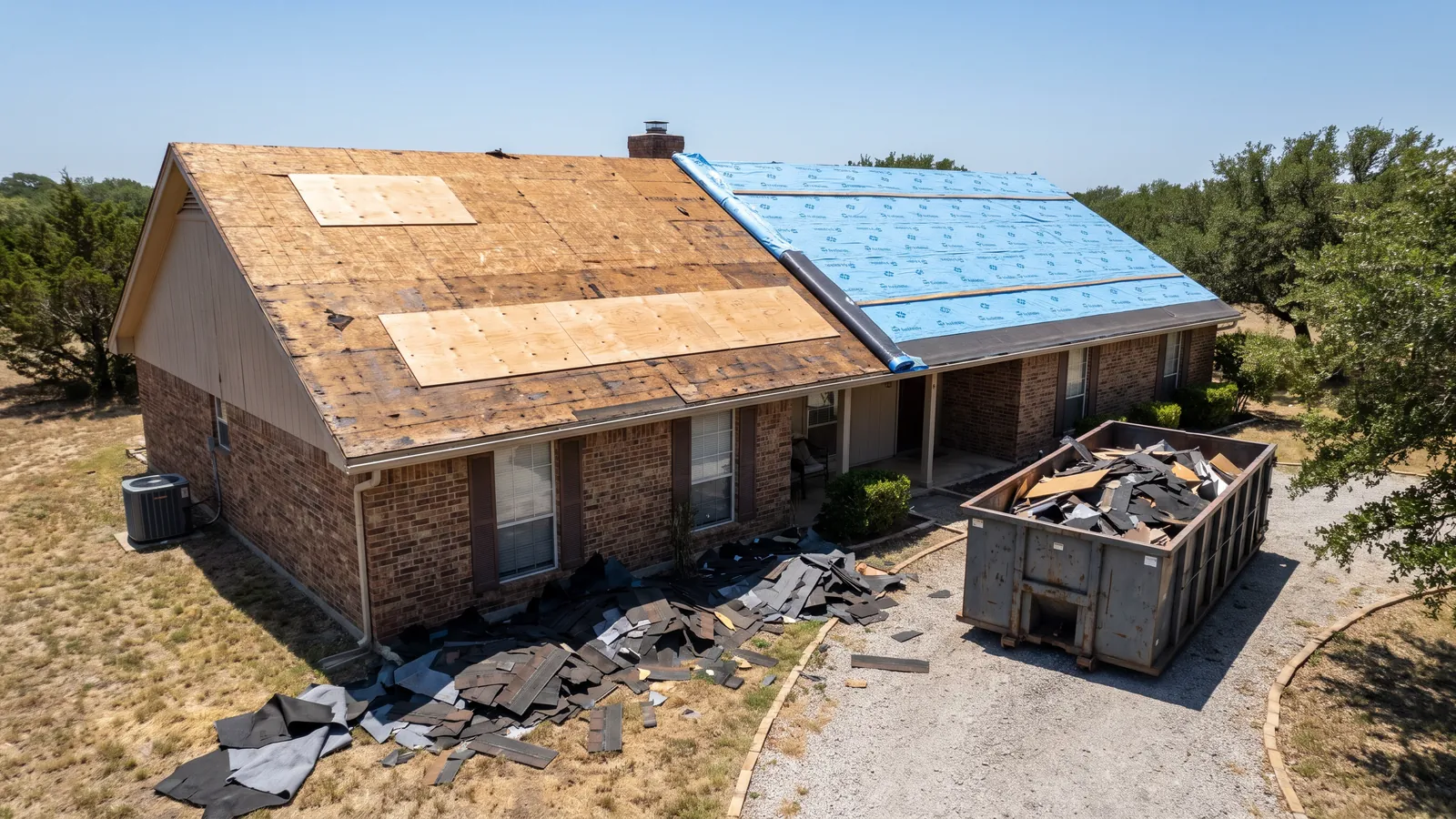
Technically, with purlins, and some installers do it. The crews here do not, because it hides decking problems, traps heat and moisture, and voids the warranty on most panel systems. Tear-off is included in the price.
Will my insurer give a discount for metal?
Many do, for a Class 4-rated panel, and some then exclude cosmetic hail damage in the same policy. Ask your agent for both figures before choosing the finish; the roofer can supply the panel's rating documents.
Can you repair the metal roof I already have?
Yes. Backed-out fasteners, failed gaskets, open seams, rusted panels at the eave and cracked pipe boots are all routine repairs, priced after a free inspection.