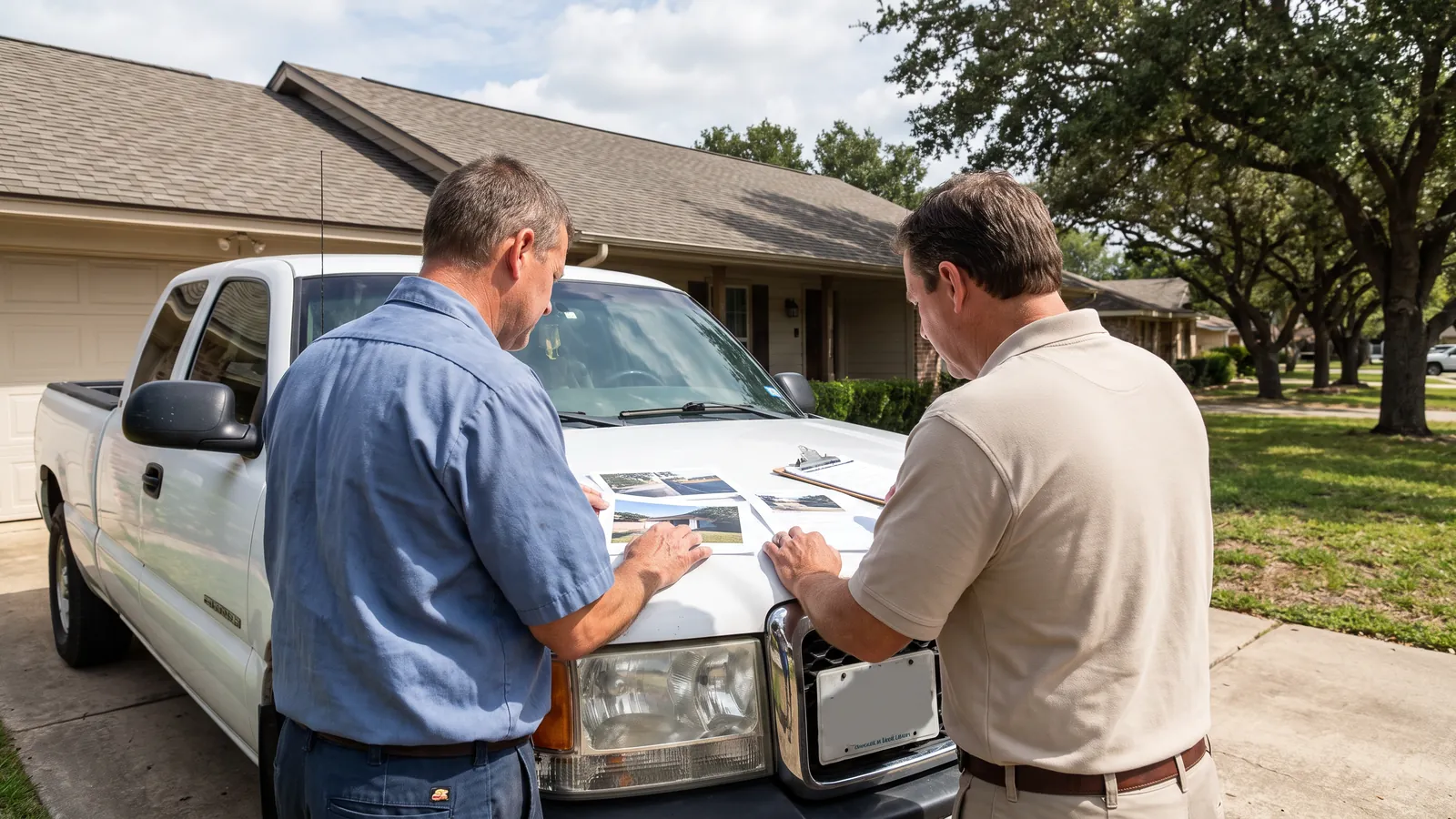
The first law is Business and Commerce Code section 27.02, strengthened by House Bill 2102 in 2019. A contractor may not pay, waive, absorb, rebate or offset any part of your insurance deductible, in cash or by inflating the invoice to cover it, and doing so is a Class B misdemeanor. Your carrier may require reasonable proof that you paid the deductible before releasing the recoverable depreciation, and a roofer who offers you a free roof is exposing you to that withheld payment as well as breaking the law. The second is Insurance Code section 4102.163, from House Bill 1183 in 2013: a roofing contractor may not act as a public adjuster, or advertise that it will adjust claims, on any property it is roofing or may roof, even if someone in the company holds an adjuster license. The roofer who promises to handle your claim and negotiate with your carrier is promising something Texas forbids.
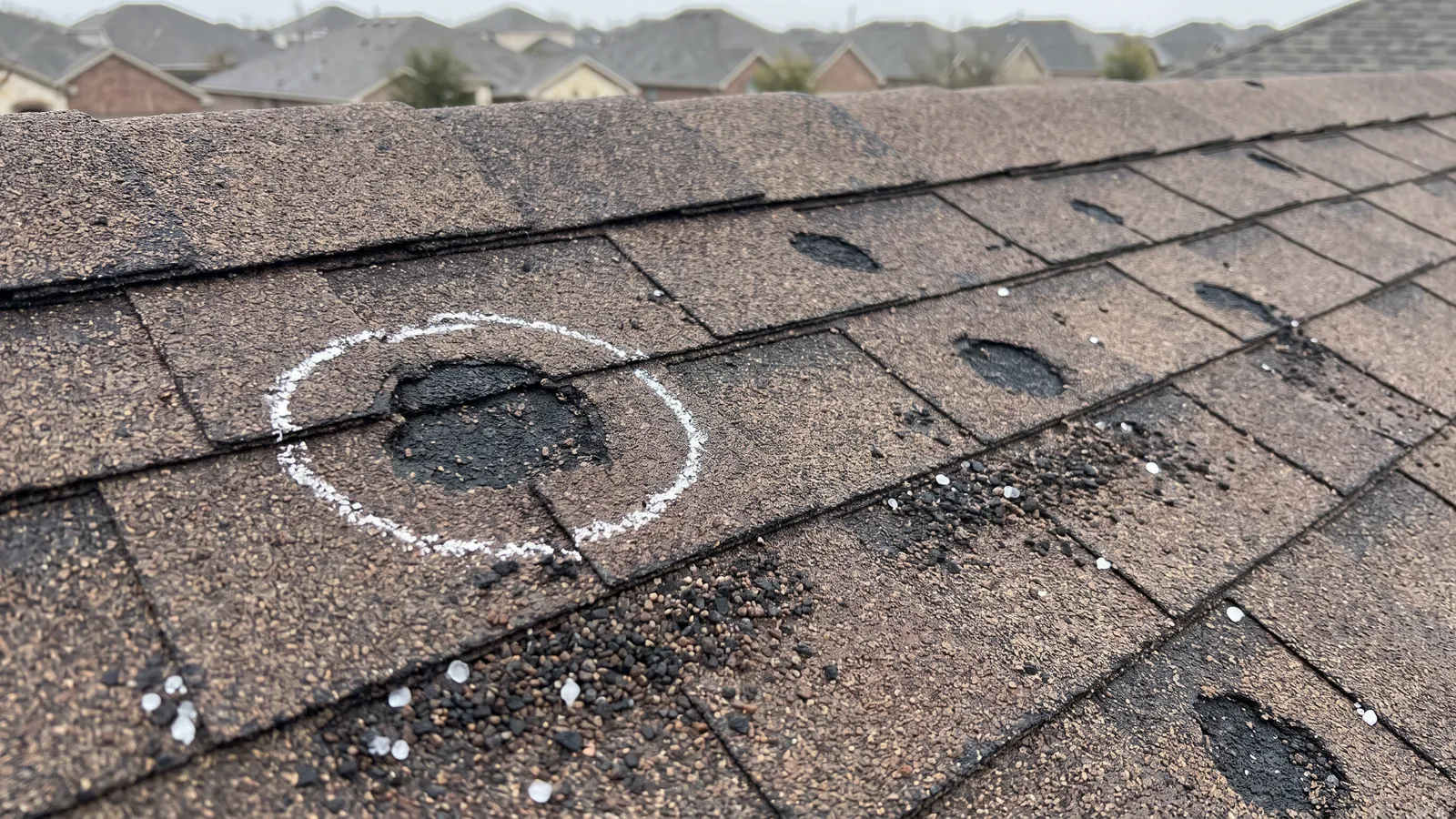
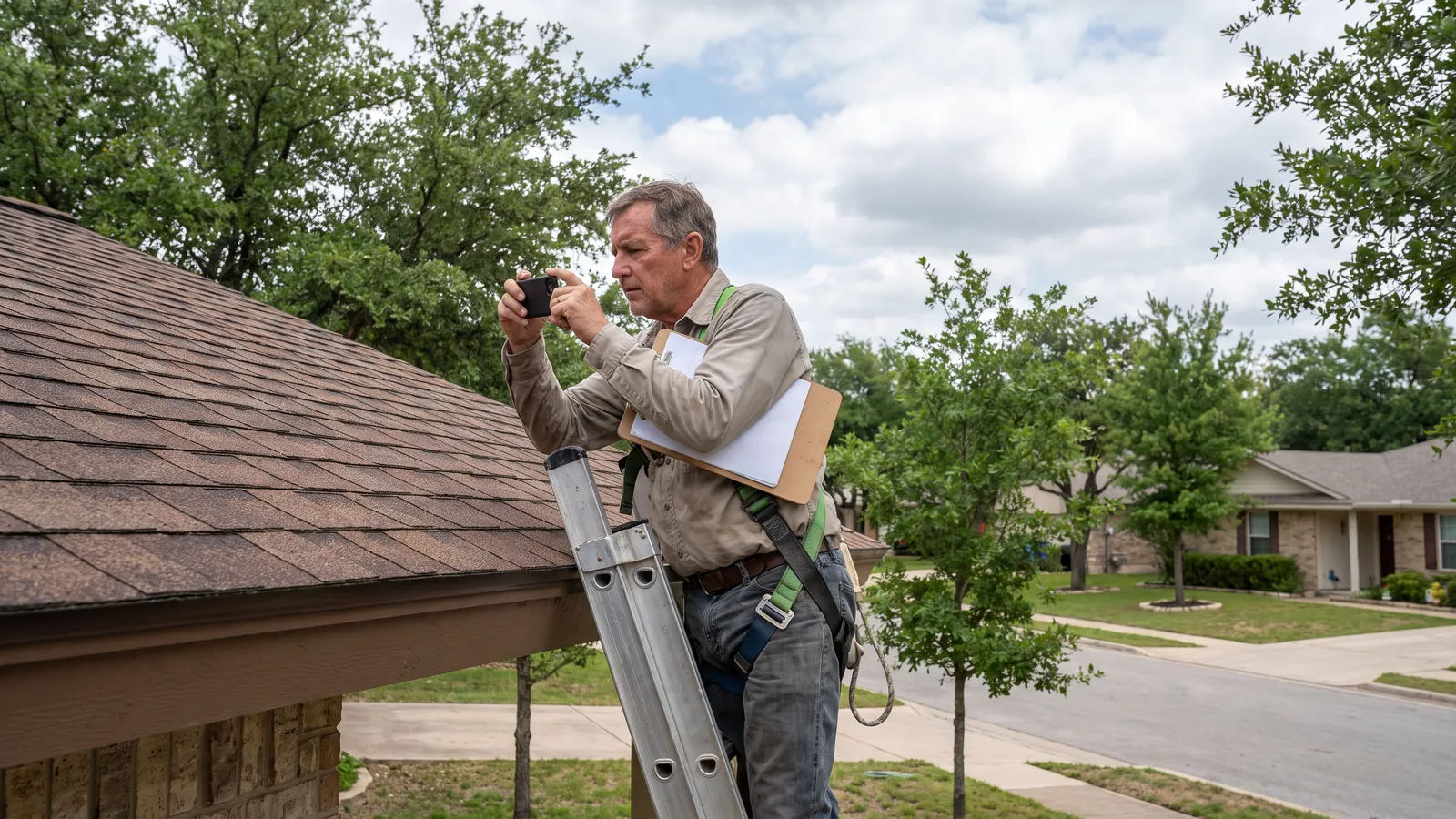
Here is what a roofer may do, and what the crews here do. Inspect the roof and document the damage the way an adjuster assesses it: test squares on each slope, strike counts, photographs with a scale, the collateral evidence on gutters, vents, fences and air-conditioner fins, and the date of the storm from the Weather Service reports. Give you a written estimate for the repair or replacement, itemized, which is a document you may hand to your carrier. Be present when the adjuster inspects, walk the roof with them, and point out what was found so nothing is missed. Answer the adjuster's technical questions about materials and code requirements, including Austin's Class A requirement inside the Wildland-Urban Interface zones, which can affect what a like-kind replacement costs. And do the work once you and your carrier have agreed on the scope, at the price on the sheet.
What stays with you: filing the claim, talking to your carrier about coverage, deciding whether to file at all, and paying your deductible. If a claim is disputed, Texas licenses public adjusters who may represent you for a fee, and the Texas Department of Insurance takes complaints about carriers; a roofer may suggest neither on your behalf. The hail claim guide walks through the sequence from the storm to the final payment, and the hail damage page covers the inspection itself.
How the job is done
Damage documented to the adjuster's standard
Test squares, strike counts, scale photographs and collateral evidence, dated to the storm from Weather Service reports.
Itemized written estimate
Materials, labor, decking, flashing, permit and disposal on separate lines, in a form you may hand to your carrier.
Adjuster meeting at the house
The roofer walks the roof with the adjuster and points out what was found; scheduling is around the carrier's visit.
Code questions answered
Austin's Class A requirement in the WUI zones, ventilation and underlayment requirements, and what a like-kind replacement actually involves here.
Deductible stays yours
No discount, rebate or invoice adjustment to cover it, under section 27.02; proof of payment provided for your carrier's file.
No adjusting, by law
The roofer does not file, negotiate or settle the claim, under section 4102.163; you do, with a licensed public adjuster if you choose one.
What insurance claim documentation costs around Austin in 2026
| Item | Planning range | Depends on |
|---|---|---|
| Storm inspection and photo package | Free | Any roof after any storm |
| Itemized estimate for the claim file | Free | Repair and replacement options |
| Meeting the adjuster at the property | No charge | Scheduled around the carrier |
| Supplement documentation for missed items | Free | Photographs and measurements only; you submit them |
| Replacement after an approved claim, per square | $450 – $650 | Architectural shingles; scope agreed with the carrier |
| Class 4 upgrade beyond the carrier's scope, per square | +$50 – $90 | Your choice; often discounted at renewal |
| Code-required items beyond like-kind | Per the sheet | Where ordinance-and-law coverage applies |
| Proof of deductible payment for the carrier | Included | On your invoice |
These are 2026 planning ranges for Travis, Williamson and Hays counties, not quotes. The figure that binds anyone is the itemized sheet written after the inspection, good for 30 days, with materials, labor, decking, flashing, permit and disposal on their own lines. The inspection itself is free.
On the roof
Questions about insurance claim documentation
Can you waive my deductible if I use you for the whole job?
No, and no honest Texas roofer can. Section 27.02 makes it a crime to pay, waive, rebate or offset a deductible, and your carrier may hold back the depreciation until you prove you paid it. Walk away from anyone who offers.
Will you talk to my insurance company for me?
The roofer can meet the adjuster at the house, walk the roof with them and answer technical questions. Filing the claim, negotiating coverage and settling it are yours to do, because section 4102.163 bars a roofer from acting as your adjuster.
What if the adjuster misses damage?
The roofer's photographs and measurements of what was missed are yours to submit as a supplement. Many carriers reinspect when shown dated, scaled photographs. If it stays disputed, a licensed public adjuster can represent you; a roofer cannot.
Does insurance pay for Austin's Class A upgrade in the WUI?
If your policy carries ordinance-and-law coverage, code-required upgrades are generally covered up to its limit; without it, the difference between like-kind and code-compliant is yours. The roofer documents the requirement so your carrier can apply the coverage.
How long do I have to file after a storm?
Policies differ; many Texas policies require notice within a year of the loss, and prompt notice is always better. Check your declarations page or ask your agent, and get the inspection done early so the decision is informed.