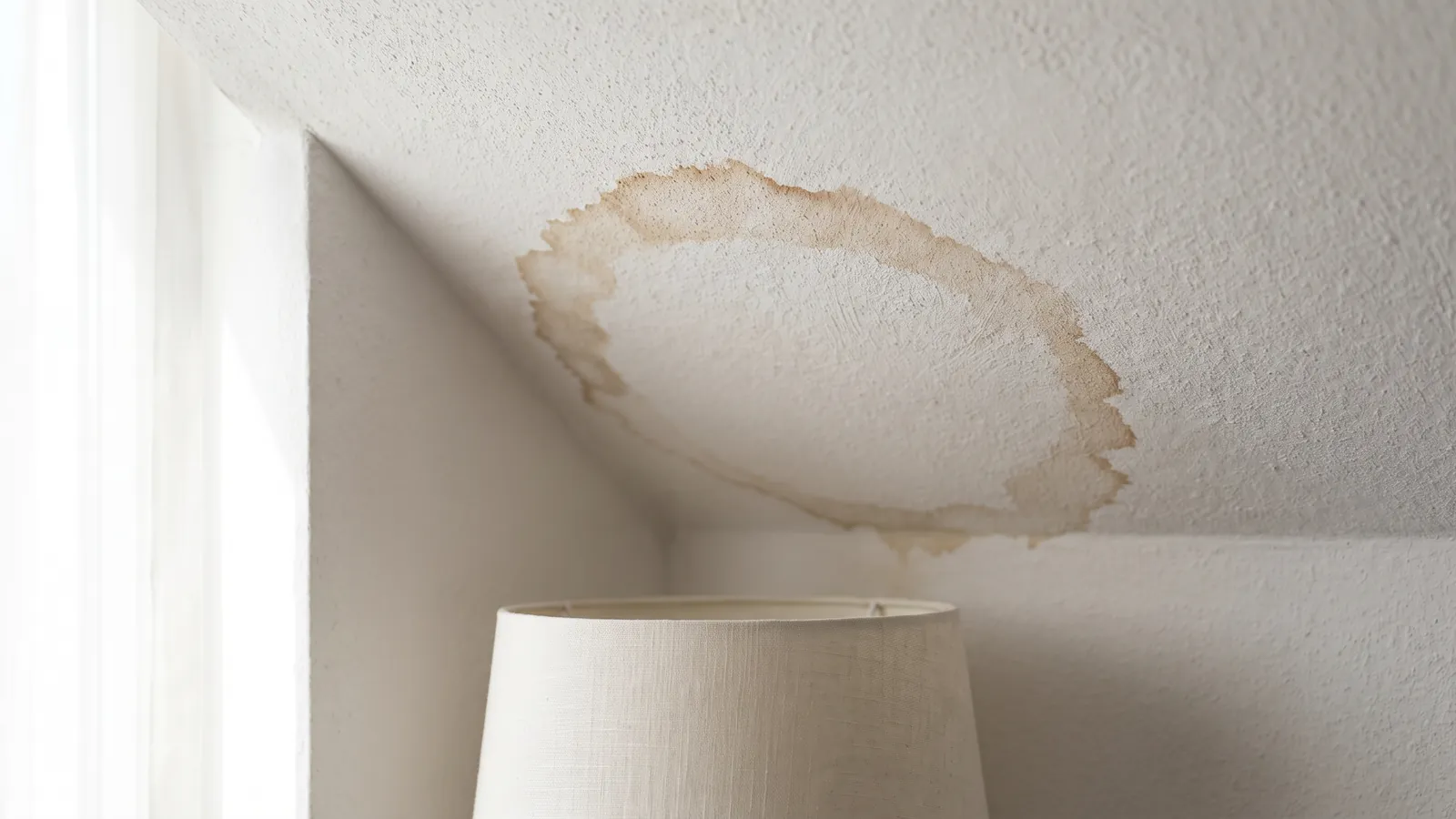
The leaks that show up in Austin follow the seasons. In the May and October rains it is the penetrations: plumbing vent boots cracked by years of sun, satellite-dish lag bolts put through shingles by an installer in a hurry, the flashing around a bathroom exhaust cap. After a spring wind event it is lifted shingles above a wall or along a rake where the sealant strip let go. After hail it is the fractured shingles over a valley or a skylight. And in the one hard freeze a year it is ice backing up under the first courses at an eave on a north slope. Each has a different fix, and the attic tells you which it is before anyone climbs.
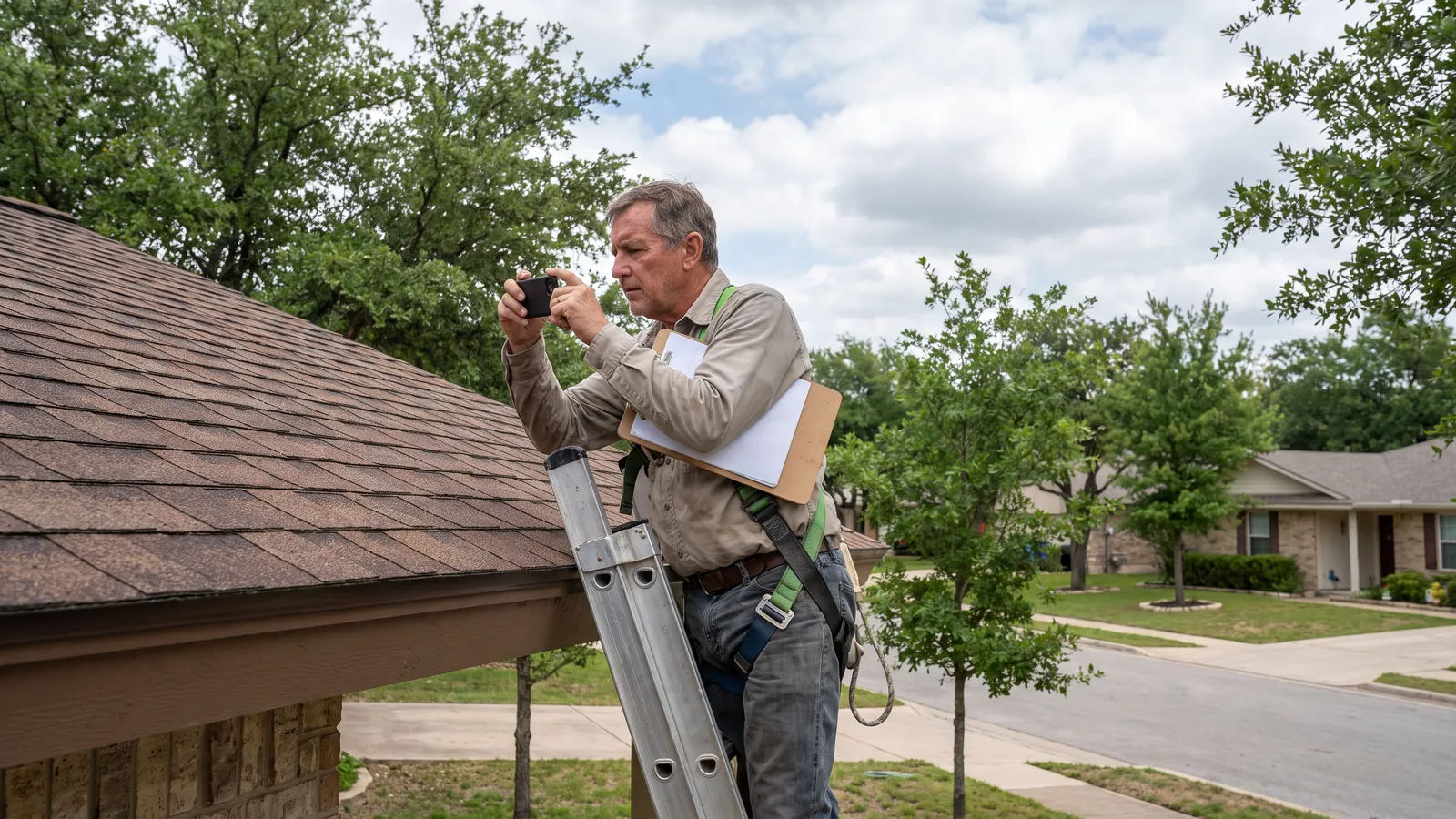
The inspection runs inside and out. Inside, the roofer looks for the water trail on the underside of the decking, stained rafters, daylight at a vent and wet insulation, and marks the entry point relative to the roof above. Outside, the suspect area is checked shingle by shingle and flashing by flashing. On a dry day a hose test from the eave upward can reproduce the leak in minutes when the path is not obvious. Only then is a repair priced, and only the repair that is needed: a new boot and a few relaid shingles, a section of step flashing, a rebuilt valley with ice-and-water shield, or a reflashed skylight curb.
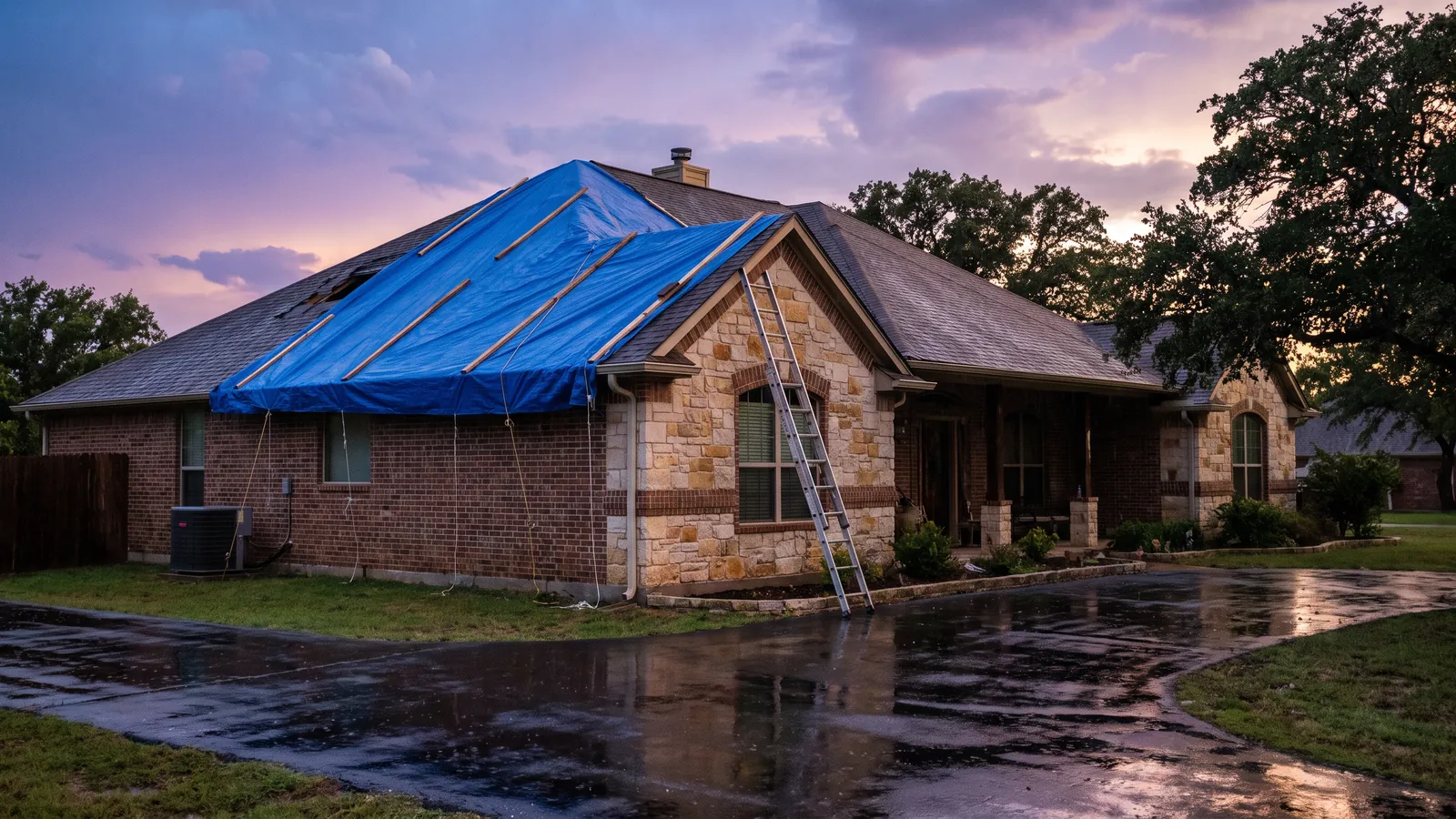
If water is coming in right now, say so when you call. A crew can tarp the slope the same night where it is safe to climb, so the ceiling stops getting worse, and the proper repair is done in daylight at the written price. The emergency page explains what to do inside the house in the meantime.
How the job is done
Attic trace
The water path is followed on the underside of the decking from the stain uphill to the entry, which is usually several feet from where the ceiling shows it.
Hose test when needed
On a dry day, water is run from the eave upward in stages to reproduce the leak and prove the entry before anything is replaced.
Boots, flashing and valleys
The usual culprits are replaced properly: a new boot with relaid shingles, stepped and counterflashed metal, a valley rebuilt over self-adhered membrane.
Skylights and chimneys
Curbs reflashed with new step and head flashing; a failed skylight unit is priced for replacement rather than resealed again.
Decking and insulation
Wet or rotten decking is cut out and replaced per sheet; soaked insulation under it is flagged so it can be dried or replaced before mold starts.
Same-night tarp if it is raining in
Where it is safe to climb, a tarp goes on that night; the repair follows in daylight at the price already written.
What leak repair costs around Austin in 2026
| Item | Planning range | Depends on |
|---|---|---|
| Leak inspection, attic and roof, with photographs | Free | Any roof |
| Hose test to locate a stubborn leak | Included | Done with the inspection where needed |
| Pipe boot replaced and shingles relaid | $225 – $450 | Count; steep adds |
| Lifted shingles resealed or replaced above a wall | $300 – $750 | Length; match |
| Step and counterflashing at a wall or chimney | $500 – $1,400 | Length; masonry work |
| Valley rebuilt with ice-and-water shield | $650 – $1,600 | Length; metal or closed-cut |
| Skylight reflashed | $450 – $900 | Size; curb condition |
| Emergency tarp, same night | $350 – $900 | Area; height; access |
These are 2026 planning ranges for Travis, Williamson and Hays counties, not quotes. The figure that binds anyone is the itemized sheet written after the inspection, good for 30 days, with materials, labor, decking, flashing, permit and disposal on their own lines. The inspection itself is free.
On the roof
Questions about leak repair
The stain only appears in heavy rain. Why?
Light rain runs off before it reaches a marginal flashing or a lifted shingle; a downpour or wind-driven rain pushes water past it. That pattern usually points to flashing at a wall or chimney rather than a hole in the field.
Can I just paint over the ceiling stain?
After the leak is fixed and the drywall has dried, yes, with a stain-blocking primer first. Before the leak is fixed it hides the evidence and lets the decking keep rotting.
Is a leak around the chimney the roof or the chimney?
Both are possible. Cracked mortar caps, missing cricket flashing and failed counterflashing all put water in the same place. The roofer checks the cap and the crown as well as the flashing and tells you which it is.
Will a leak repair hold, or is the roof done?
If the shingle field is sound, a proper repair holds for the life of the roof. If granules are gone across the slopes and the shingles crack when lifted, the roofer will say the roof is at the end and show you the replacement figure alongside the repair.