The gutter's job on a Central Texas house is to get a sudden, heavy rain off the roof and away from the slab, because the clay soils here swell and shrink with moisture and a downspout dumping at the foundation corner is how doors start sticking. That argues for six-inch gutters on most two-story homes and on any roof with long valleys concentrating the flow, three-by-four-inch downspouts rather than the small ones, and extensions or drain lines that carry water at least five feet from the house. Gutters are run seamless on site from aluminum coil in the color closest to the trim, with hidden hangers every two feet so a load of wet oak leaves does not pull them off the fascia.
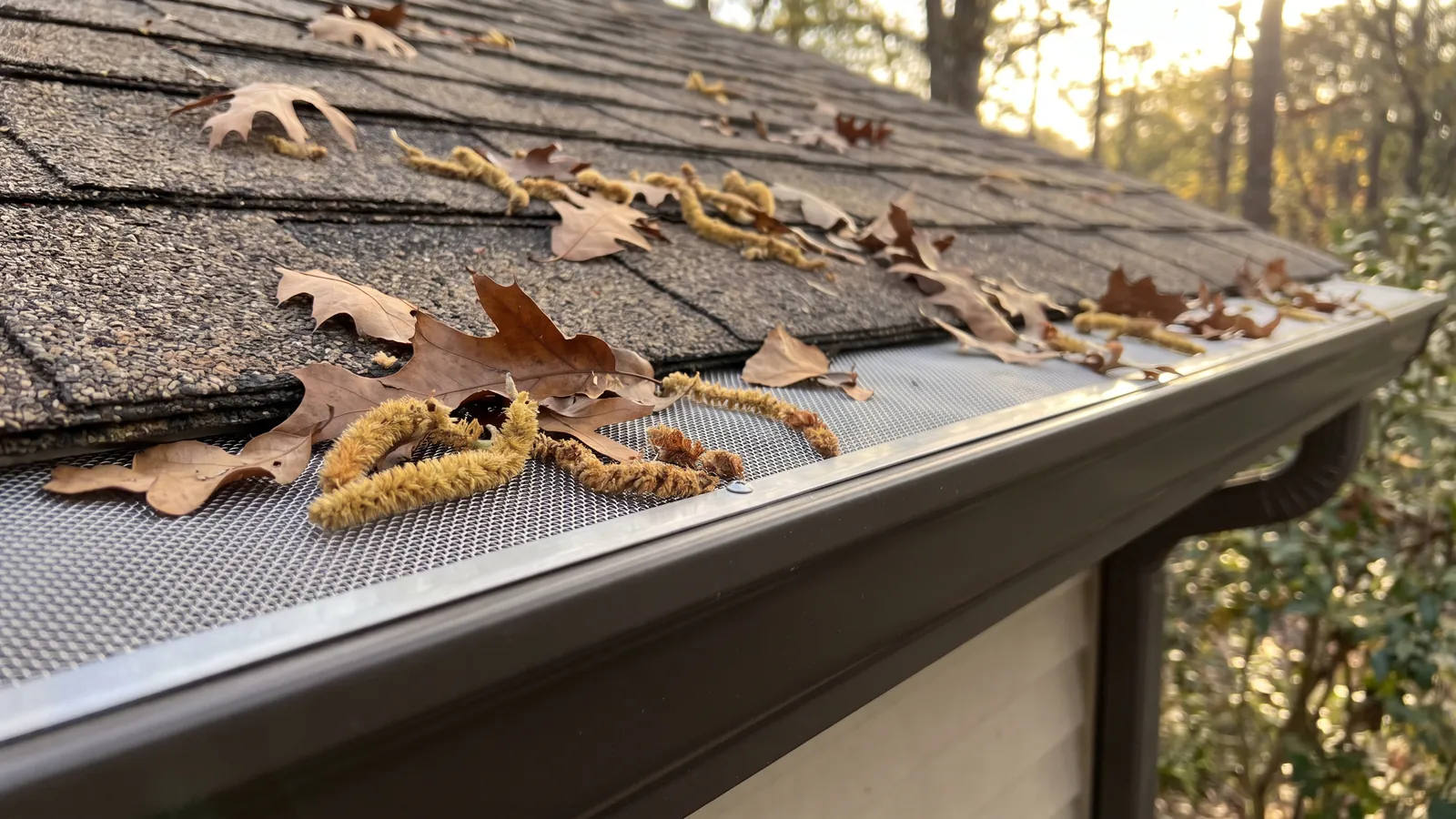
Guards are the Austin question. Live oaks drop catkins in March and April that mat into a felt that no screen stops and every screen collects; cedar and juniper drop needles that work through coarse mesh; pecan and hackberry drop leaves in volume in the fall. Micro-mesh stainless guards handle all three best and cost the most; reverse-curve guards shed leaves but let catkins ride over in a downpour; foam and brush inserts clog with cedar in a season and are not offered here. The roofer looks at the trees over the roof before recommending anything, and will say plainly when the cheapest answer is no guard and a cleaning twice a year.
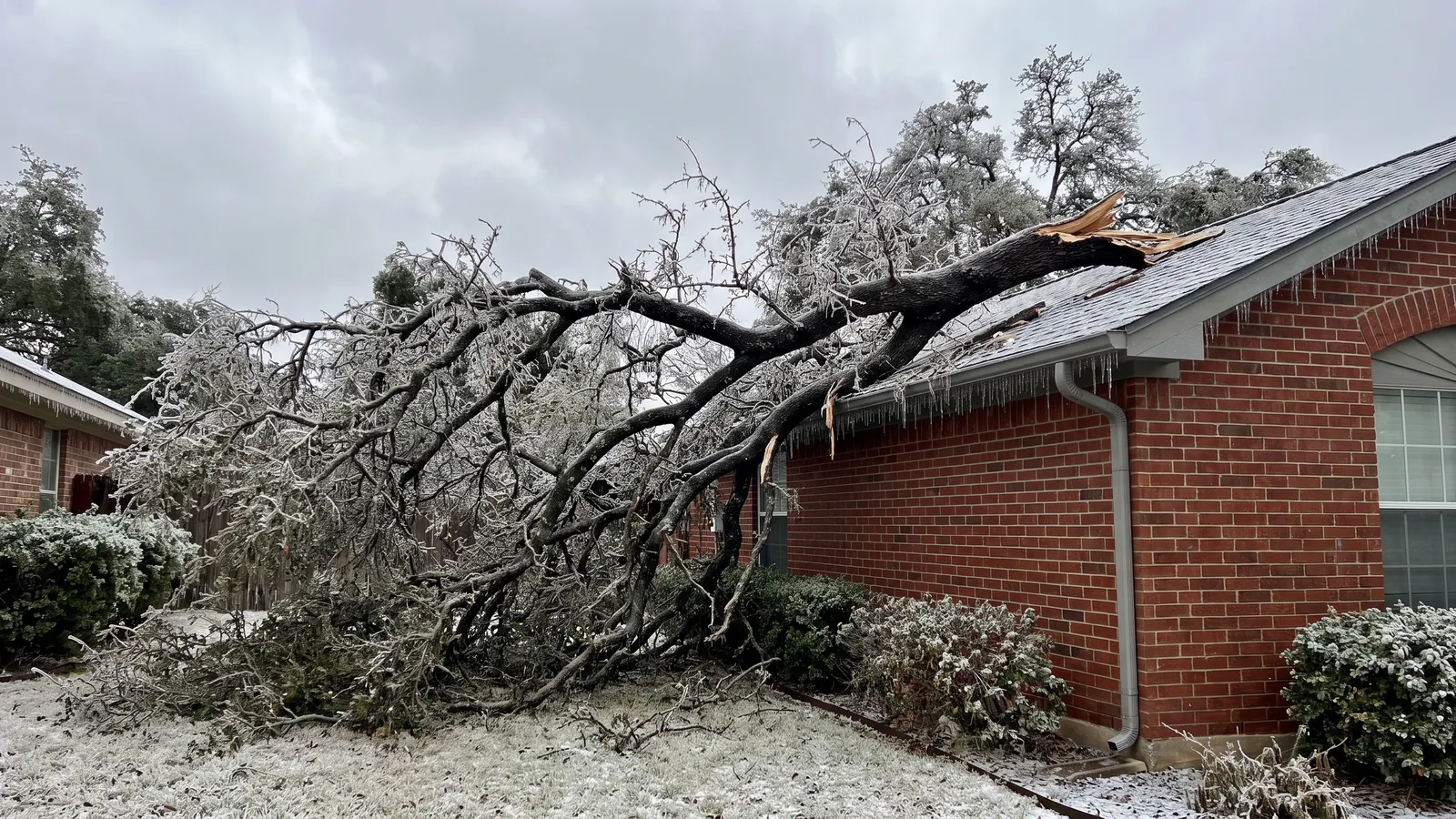
Gutters also tell the story of the roof. A gutter full of granules after a storm is hail evidence; dents in the gutter and downspout are the collateral an adjuster photographs first. Gutters torn off by ice-laden limbs, as thousands were in the February 2023 storm, are replaced with the fascia checked behind them. And a new roof is the right time to replace tired gutters, because the drip edge and the gutter apron go in together.
How the job is done
Seamless aluminum, run on site
Continuous runs formed from .032 coil in the color nearest your trim, with no joints to open except at corners and ends.
Sized for the rain and the roof
Six-inch gutters and three-by-four downspouts where valleys and two-story slopes concentrate the flow; five-inch where they do not.
Hidden hangers every two feet
Screwed through to the rafter tails, not spiked into fascia, so a gutter full of wet leaves stays put.
Pitched to the downspouts
A quarter inch of fall every ten feet toward downspouts placed where the water actually goes, not where the last installer found it convenient.
Guards matched to the trees
Micro-mesh for live oak catkins and cedar needles, reverse-curve where only leaves fall, and an honest no-guard recommendation where cleaning is cheaper.
Water carried away from the slab
Splash blocks, extensions or buried drain lines so downspouts do not feed the clay at the foundation corners.
What gutters and guards costs around Austin in 2026
| Item | Planning range | Depends on |
|---|---|---|
| Seamless 5-inch aluminum gutter, per foot | $9 – $14 | Color; hangers; corners |
| Seamless 6-inch aluminum gutter, per foot | $11 – $17 | Two-story; long valleys |
| Downspout, 3×4 inch, each | $95 – $170 | Length; elbows |
| Micro-mesh stainless gutter guard, per foot | $9 – $16 | Gutter size; roof pitch |
| Reverse-curve guard, per foot | $7 – $13 | Profile |
| Gutter repair: reseal corners, re-hang, replace a section | $150 – $500 | Extent |
| Cleaning and flush, typical home | $150 – $300 | Stories; guards |
| Underground drain line from a downspout, per run | $300 – $900 | Length; outlet |
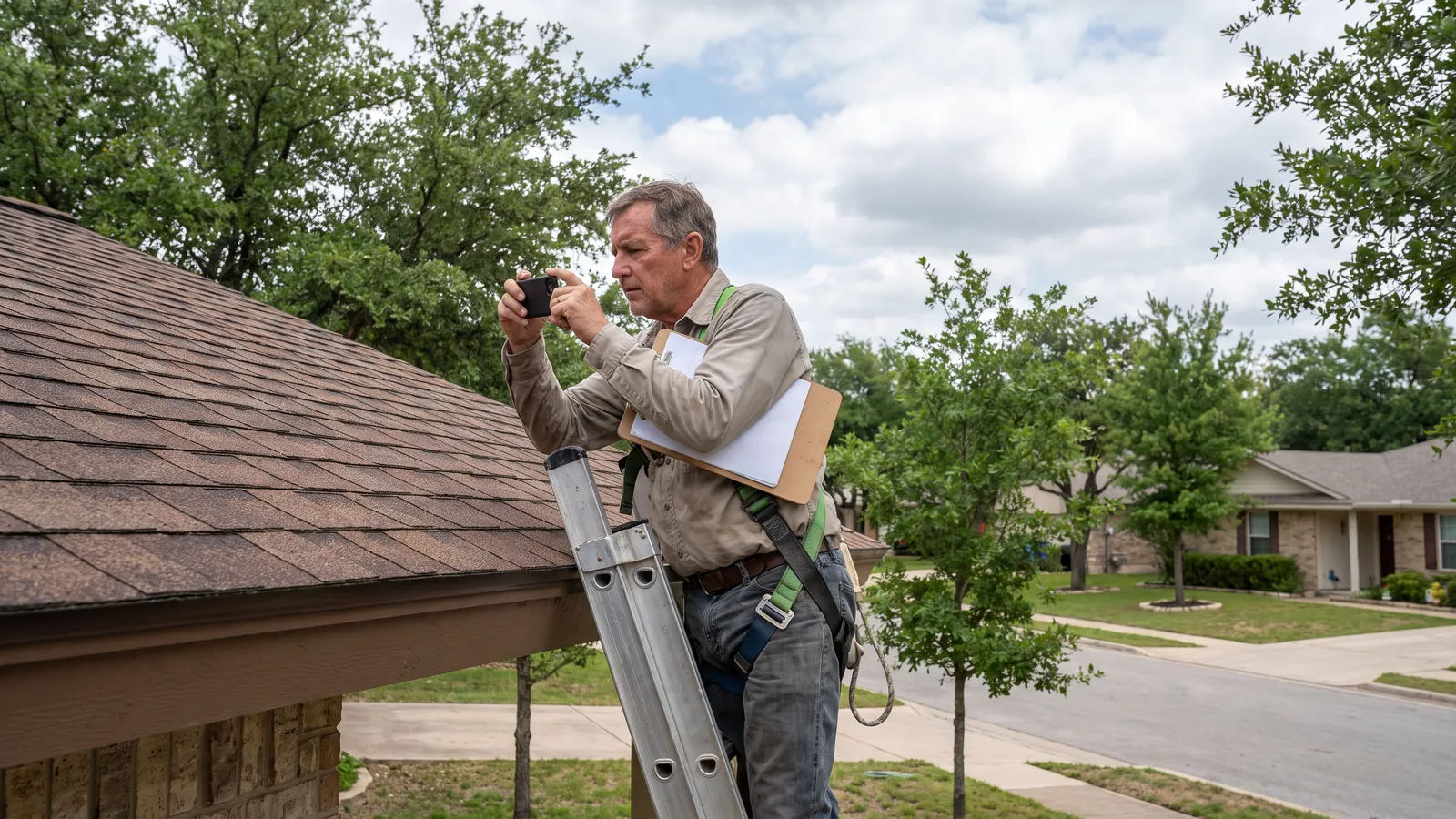
These are 2026 planning ranges for Travis, Williamson and Hays counties, not quotes. The figure that binds anyone is the itemized sheet written after the inspection, good for 30 days, with materials, labor, decking, flashing, permit and disposal on their own lines. The inspection itself is free.
On the roof
Questions about gutters and guards
Five- or six-inch gutters?
Six-inch on most two-story homes, on any roof with long valleys, and anywhere the existing five-inch gutter overflows at the inside corners in a hard rain. Five-inch is fine on a small single-story roof with short runs.
Do gutter guards work with live oaks?
Micro-mesh does, because catkins and the fine debris that follows sit on top and blow or wash off, while the mesh passes the water. Screens and foam do not; catkins mat on them or in them. The roofer looks at your trees before recommending.
Can gutters go on with the new roof?
Yes, and it is the best time: the drip edge and gutter apron go in together so water cannot get behind the gutter, and the old gutters come down with the tear-off.
Why does water pour over the gutter in a storm?
Undersized gutters, too few or clogged downspouts, or a valley dumping concentrated flow at one spot. A splash guard at the valley and a larger downspout there often fix it without replacing the run.
My gutters were pulled off by a limb. Is the fascia damaged?
Often. The crew checks and replaces split or rotten fascia before hanging new gutter, and photographs it for your insurer if the damage was storm-related.