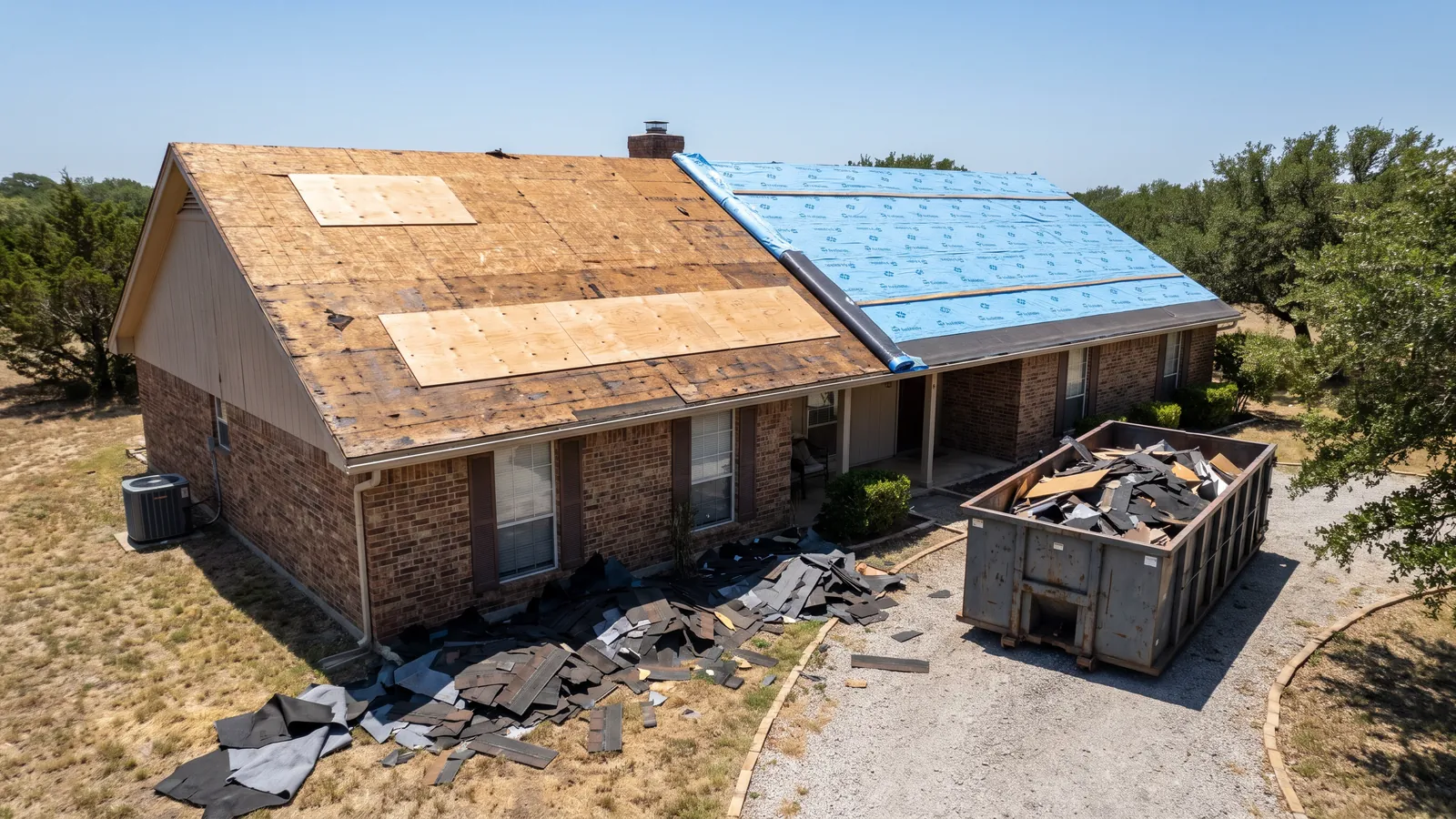
The houses being reroofed around Austin right now are mostly the production homes of the 1990s and 2000s, in Circle C, Avery Ranch, Steiner Ranch, Round Rock's Forest Creek and Teravista, Pflugerville's Falcon Pointe and the first phases of Cedar Park's Buttercup Creek. Their original three-tab and early architectural shingles were rated for twenty to thirty years in a climate that delivers 100-degree roof-deck temperatures for weeks and hail most springs; twenty is about what they get. The other group is the hail roofs: houses under the September 2023 and April 2024 cores over West Lake Hills and Northwest Hills, where stones of two and a half to three inches ended the argument.
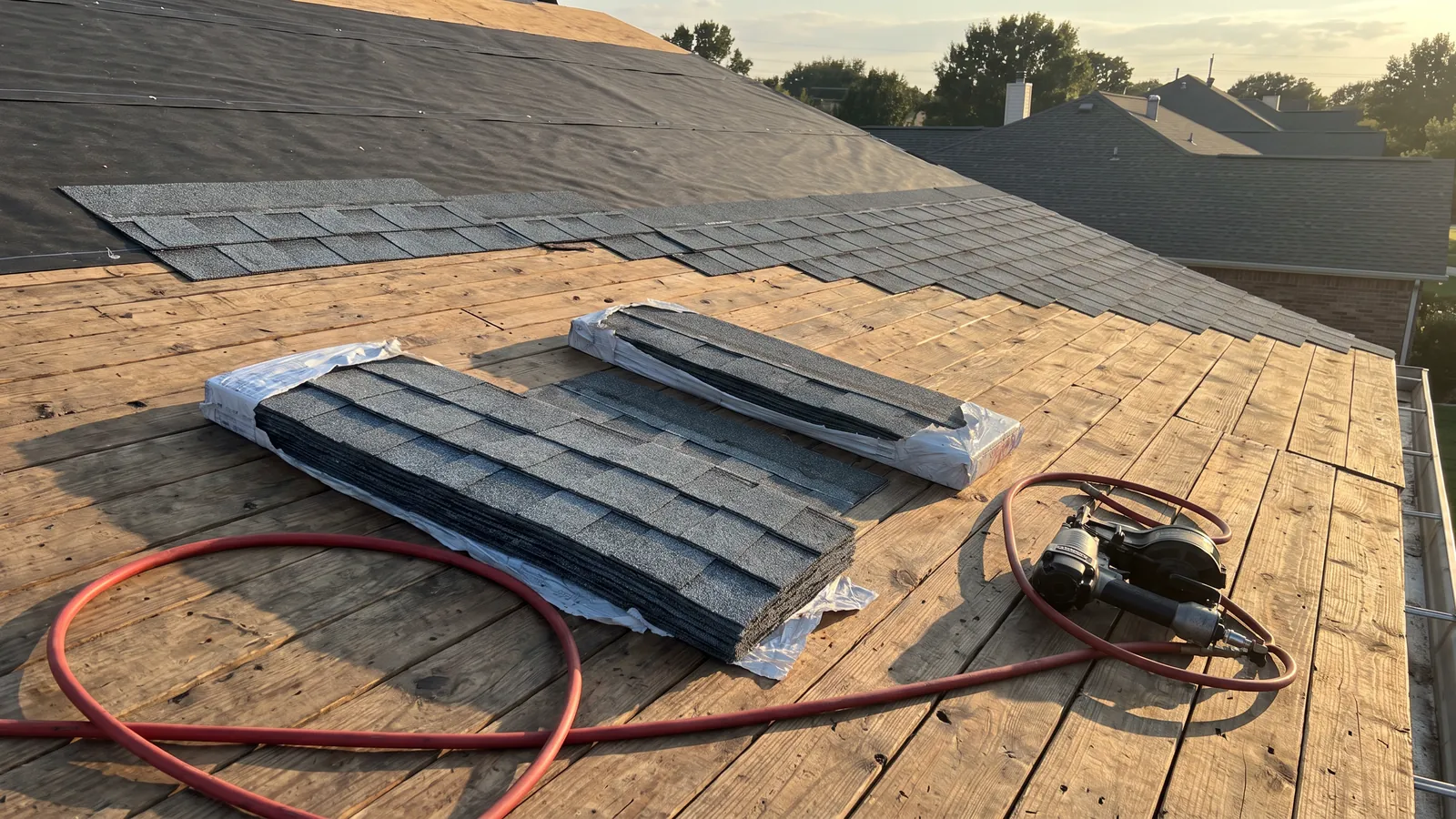
A proper replacement starts with tear-off to bare decking, not a second layer. The deck is walked and probed, and any sheet that is soft, delaminated or split gets replaced and priced per sheet. Ice-and-water shield goes in every valley and around every penetration, synthetic underlayment over the field, new drip edge at every eave and rake, new step flashing at walls and new pipe boots. Ventilation is checked against the attic's size, because a roof that cooks from underneath fails early no matter what is on top. Then the shingles or panels go on at the nailing pattern the manufacturer specifies, which is what keeps the wind warranty valid.
Austin adds a step most cities do not. If the address is inside the City's Wildland-Urban Interface zones, the new roof has to be a Class A assembly, the valleys need metal flashing over approved underlayment, and the job needs a permit. Architectural shingles over the right underlayment and standing-seam metal both qualify, but the paperwork has to be done, and the roofer checks the map for your address on the inspection. Outside the zones, a shingle-for-shingle replacement is exempt from a City permit. Round Rock, Cedar Park, Pflugerville, Leander and the Hays County cities each have their own rules, and the roofer confirms them before scheduling.
How the job is done
Tear-off to the deck
No second layers. The old roof, felt and flashing come off so the decking can be seen, walked and repaired before anything new goes down.
Decking priced per sheet
Soft, split or delaminated sheathing is replaced with new plywood or OSB and shown on the sheet by the sheet, so there is no surprise on the day.
Ice-and-water in the water paths
Self-adhered membrane in every valley, around chimneys, skylights and pipes, and along eaves where ice dams form in the rare freeze.
Ventilation corrected
Ridge and intake vents sized to the attic, because a roof baked from below in July fails years early whatever the shingle rating.
WUI and permit check
The City's wildfire-zone map is checked for your address; inside it, the roof is specified as a Class A assembly and the permit is pulled before the job.
Warranty in writing
The manufacturer's material warranty registered in your name and the contractor's workmanship warranty written on the invoice, with the photo set of the finished roof.
What roof replacement costs around Austin in 2026
| Item | Planning range | Depends on |
|---|---|---|
| Architectural shingles, installed, per square | $450 – $650 | Pitch, stories, tear-off layers, waste |
| Class 4 impact-resistant shingles, per square | $500 – $720 | Brand; often offsets a premium discount |
| Typical 25- to 35-square Austin home, shingles | $11,000 – $23,000 | Complexity; decking; ventilation |
| Standing-seam metal, per square | $1,100 – $1,800 | Gauge, finish, panel profile, trim |
| Decking replaced | $95 – $160 per sheet | Count found at tear-off |
| Ridge vent, intake vents, pipe boots, drip edge | Included | Part of the system |
| Steep pitch (8/12 and up) or two-story | +10% – 20% | Safety staging and time |
| City of Austin permit where the WUI rule applies | $250 – $600 | Shown as its own line |
These are 2026 planning ranges for Travis, Williamson and Hays counties, not quotes. The figure that binds anyone is the itemized sheet written after the inspection, good for 30 days, with materials, labor, decking, flashing, permit and disposal on their own lines. The inspection itself is free.
On the roof
Questions about roof replacement
How long does a replacement take?
Most single-family roofs are torn off and finished in one day; large, steep or metal roofs take two or three. The crew does not leave a roof open overnight; whatever is torn off is dried in before dark.
Do I need to be home?
Not for the work, but someone should walk the finished roof with the photo set before final payment. Move cars out of the driveway, take fragile things off the walls on the top floor, and keep pets inside; it is a loud day.
Can you lay the new roof over the old one?
No. A second layer hides damaged decking, voids most manufacturer warranties, adds weight and fails early in this heat. Tear-off is part of every replacement priced here.
Will the new roof need a permit?
Inside Austin's Wildland-Urban Interface zones, yes, and it must be a Class A assembly. Elsewhere in the city, a like-for-like shingle replacement is exempt. Round Rock, Cedar Park, Pflugerville, Leander, Lakeway, Bee Cave, Dripping Springs and Buda set their own requirements, and the roofer confirms the right one for your address before scheduling.
Shingles or metal?
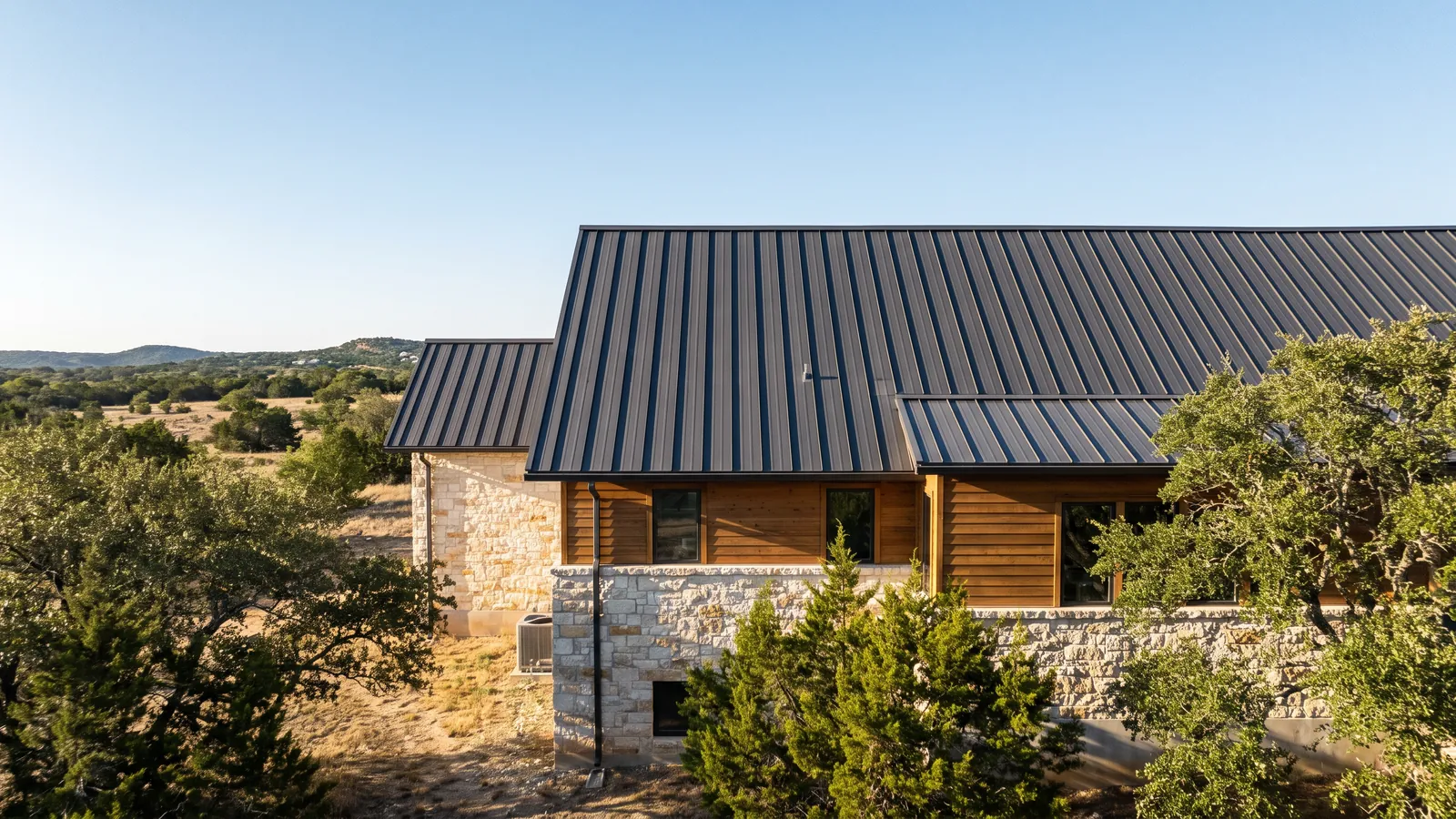
Shingles cost roughly a third as much up front and last twenty to thirty years here; standing-seam metal lasts fifty or more, reflects heat and sheds hail without granule loss, and makes rainwater collection easy. The metal roof cost guide runs the numbers over twenty years.
What about the old roof's warranty?
It ends with the tear-off. The new roof carries the manufacturer's material warranty, longer when the full system from one maker is installed, and the contractor's workmanship warranty, both written on your invoice.