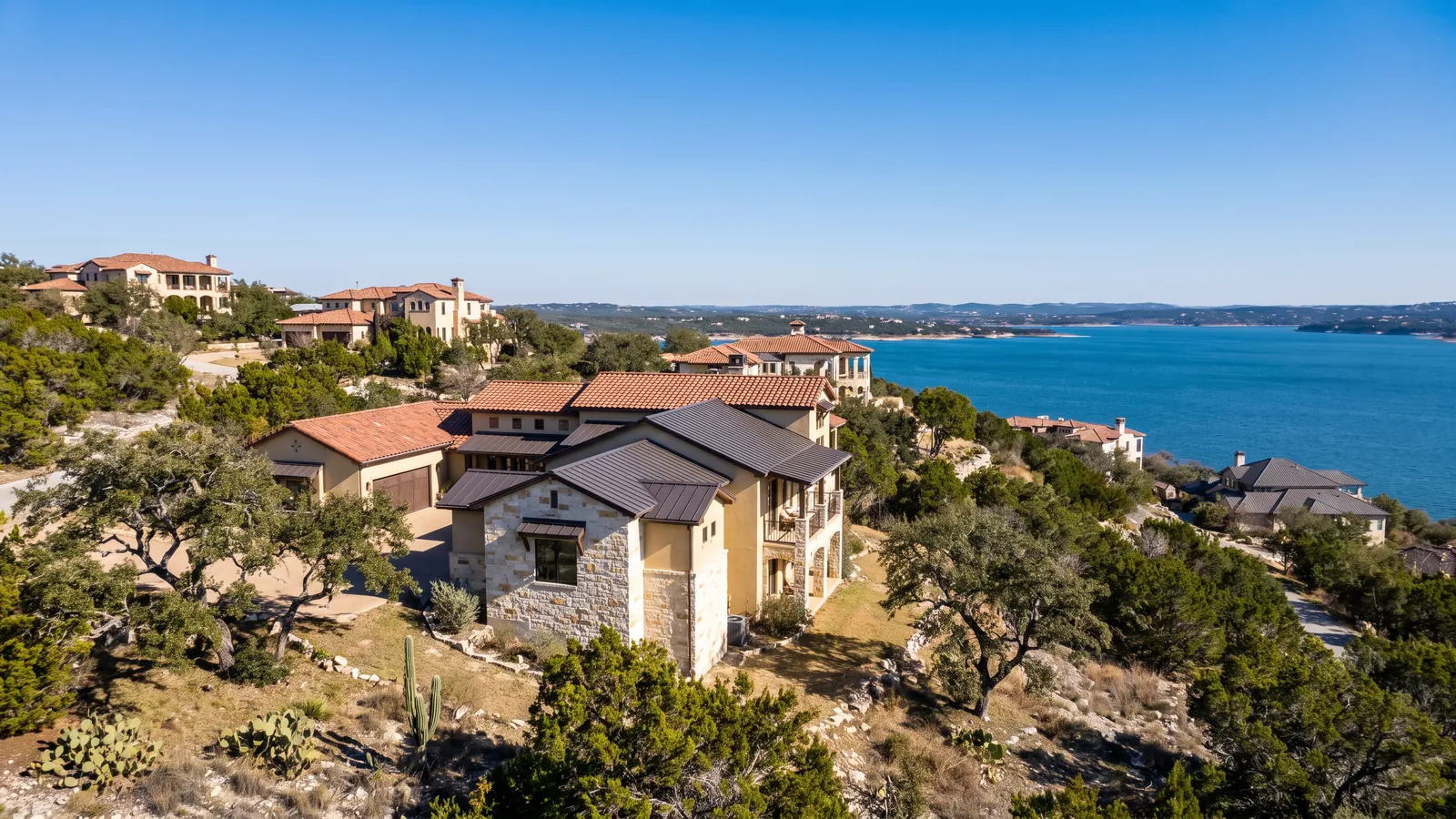
Where it came from
The Austin City Council adopted the city's first Wildland-Urban Interface Code on April 9, 2020, by Ordinance 20200409-040, and it took effect on January 1, 2021. A stricter 2024 edition was adopted on April 10, 2025, by Ordinance 20250410-041, and has been in force since July 10, 2025. The code applies inside Austin's full-purpose and limited-purpose jurisdiction; it does not apply in the extraterritorial jurisdiction, and it does not apply in Round Rock, Cedar Park, Pflugerville, Leander, Lakeway, Bee Cave, West Lake Hills, Dripping Springs or Buda, each of which has its own rules.
The zones
| Zone | Distance from wildland | Typical Austin examples |
|---|---|---|
| Proximity Zone A | 0 to 50 feet | Lots backing directly onto a greenbelt or preserve |
| Proximity Zone B | 50 to 150 feet | The next row of houses in from a canyon or creek corridor |
| Proximity Zone C | 150 feet to 1.5 miles from 750 or more acres of wildland, or half a mile from 40 or more acres | Much of Northwest Hills, Great Hills, the Barton Creek and Bull Creek corridors, Steiner Ranch and the western neighborhoods |
The City publishes an interactive map for the 2024 code and the property profile tool shows the designation for a specific address. Look up your own; a roofer should check it too during the inspection, but no roofer should tell you which zone you are in from memory, and this page does not try.
What the code says about roofs
Three things. First, the roof covering must be a Class A roof assembly, the highest fire rating, tested as a system of covering plus underlayment on the deck. Architectural shingles over the correct underlayment qualify, as does standing-seam metal; what does not qualify is a roof thrown together from mismatched parts with no listing. Second, valleys must have metal flashing over an approved underlayment, which rules out the woven-shingle valleys some installers still use. Third, no vegetative roofs. The code also addresses vents, eaves and gutters in the higher zones, and the roofer specifies ember-resistant vents where the zone requires them.
The 50 percent rule
Section 507.1 of the code says that where 50 percent or more of the roof covering is replaced, the entire roof must be replaced, as a Class A assembly, under a permit. This is the part that changes storm work. A hail or wind job that would be a two-slope repair in Pflugerville becomes a full replacement on a WUI street in Austin once the damaged area reaches half the roof. The roofer measures the damage against the whole roof and tells you which side of the line you are on before anything is priced. Below 50 percent, a repair inside the zones is still a repair, though the materials used should match a Class A assembly so the next job is simpler.
Permits inside the zones
Austin's residential work-exempt list excuses most reroofs from a building permit, but every exemption for roofing carries the same clause: unless the property is in the Wildland-Urban Interface area and 50 percent or more of the roofing is being replaced. So inside the zones a full replacement needs a permit, with the Class A assembly documented, and an inspection. The permit costs roughly $250 to $600 and appears as its own line on the sheet. The permit guide covers the exemptions in detail.
What it means for insurance
When a hail claim on a WUI roof requires a full Class A replacement rather than the partial repair a carrier might otherwise scope, the difference is a code-required upgrade. Policies with ordinance-and-law coverage generally pay for such upgrades up to the coverage limit; policies without it leave the difference to you. The roofer documents the requirement, with the zone designation and the code section, so your carrier can apply the coverage. The roofer does not negotiate it, under Insurance Code 4102.163; you do.
Choosing a roof for the zones
Class 4 architectural shingles over a listed underlayment give a Class A assembly at the shingle price and earn the hail discount. Standing-seam metal is Class A by nature, sheds embers and debris, and lasts fifty years. Either way the valleys get metal, the vents are ember-resistant where required, and the gutters get guards so dry leaves do not sit in them through a red-flag week.
Questions on this
How do I find out whether my house is in a WUI zone?
Use the City of Austin's interactive map for the 2024 Wildland-Urban Interface Code or the property profile tool, which gives the designation by address. Do not rely on anyone's memory, including a roofer's; check the map, and expect the roofer to check it again on the inspection.
My house is in Steiner Ranch. Does the code apply?
Only if the address is inside Austin's full- or limited-purpose jurisdiction and within a mapped zone. Parts of the western neighborhoods are in the city and parts are in the ETJ or other jurisdictions, and the map is the only way to know.
Does a Class A roof cost more?
Not much. Architectural shingles over the correct underlayment already form a Class A assembly on most jobs; the extra is the metal valley flashing, ember-resistant vents where required, and the permit.
Can I still repair a hail-damaged slope in the WUI?
Yes, if the damaged area is under 50 percent of the roof. At or above 50 percent the code requires a full Class A replacement under a permit. The roofer measures and tells you which it is.
Does the WUI code apply in Lakeway, Bee Cave or West Lake Hills?
No. Those are separate cities with their own building codes. The fire exposure on canyon lots there is the same, which is why Class A assemblies are recommended there on the merits.
Read next: Do you need a permit? · Roof replacement · Metal roofing · Hail claims in Texas